
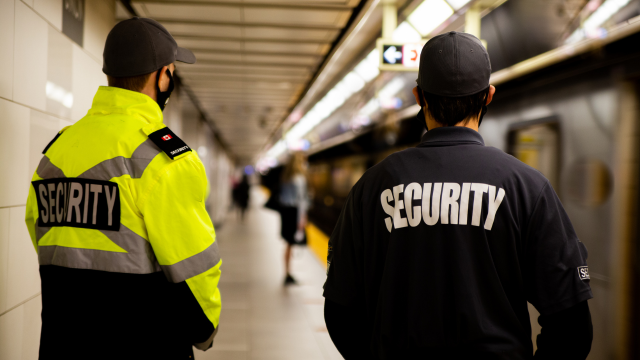
Aviation depends on layers of protection that most passengers never see. Before an aircraft leaves the gate, engineers have maintained it, flight and cabin crew have completed required training, airport teams have controlled access to restricted areas, passengers and baggage have passed through security processes, and operational staff have assessed everything from weather to aircraft loading.
Understanding How Aviation Safety and security works means understanding that these activities address different kinds of risk.
Aviation safety is concerned primarily with preventing accidents and unintentional harm. It deals with issues such as aircraft maintenance, operational procedures, human error, fatigue, runway risks and technical failures.
Aviation security, by contrast, concentrates on protecting aviation from deliberate unlawful interference, including threats to aircraft, airports, passengers, crew, cargo and aviation systems.
The two disciplines increasingly overlap. Cyberattacks can become safety problems. Poorly designed security procedures can affect human performance. Weak Airline Crew Management can create fatigue-related risk. Modern aviation therefore depends on organisations managing safety and security as connected systems rather than isolated checklists.
What Is Aviation Safety?
Aviation Safety Management is the organised effort to prevent accidents, incidents, injuries and other unintended harmful events associated with aviation.
It operates across the entire aviation system.
An aircraft manufacturer needs to design safe systems. Maintenance organisations need to ensure those systems remain airworthy. Airlines must operate aircraft within approved procedures. Pilots and cabin crew require appropriate training. Airports need safe runways, taxiways and ground operations.
Air traffic services must keep aircraft safely separated.
No single group can therefore “provide” aviation safety on its own.
A safe flight depends on multiple organisations performing their responsibilities correctly and communicating effectively when something changes.
Safety is more than avoiding crashes
Serious accidents naturally receive the greatest attention, but professional safety management starts much earlier.
A maintenance engineer discovering an incorrectly fitted component, a pilot reporting a confusing procedure or ground staff noticing repeated vehicle conflicts on an apron may all identify valuable warning signs.
These events can reveal weaknesses before somebody is injured.
This is why modern Aviation Safety Management increasingly asks:
What could go wrong, why might it happen, and what can we change before it becomes an accident?
That is the foundation of proactive safety management.
What Is Aviation Security?
Aviation security protects civil aviation against deliberate unlawful acts.
The threats are different from ordinary safety hazards because someone may intentionally try to defeat the protective system.
Security can involve passenger and baggage screening, staff vetting, access control, cargo security, protection of restricted areas and measures dealing with threats to aircraft or airport operations.
Modern Aviation Safety Management also extends into cyber security and personnel security.
The UK CAA currently describes its regulatory security work as encompassing physical, personnel and cyber security across airports, airlines, air cargo, in-flight catering and associated operations.
Safety and security are different, but connected
Imagine an aircraft component failing because of unexpected material fatigue.
That is principally a safety event.
Now imagine somebody deliberately damaging the same component.
The technical consequence could be similar, but the cause becomes a security issue.
The response also changes.
Safety professionals may examine reliability, maintenance procedures and engineering design.
Security specialists may examine access controls, insider threats, intent and protective measures.
A mature Aviation Safety Management organisation needs both capabilities.
How Aviation Safety Management Works
Aviation Safety Management is built around identifying risks systematically rather than waiting for accidents.
The CAA describes a Safety Management System, or SMS, as a proactive and systematic framework for managing safety risks.
A functioning SMS normally contains several connected elements.
The organisation establishes its safety policy and responsibilities. It identifies hazards and assesses risk. Controls are introduced. Performance is monitored to see whether those controls actually work.
Training and communication help employees understand the system.
Management of change is also important because new aircraft, new technology, organisational restructuring or different operating conditions can introduce new hazards.
Hazard identification
A hazard is something with the potential to contribute to harm.
Examples might include:
- fatigue among operational staff;
- poor runway markings;
- repeated maintenance errors;
- confusing operating procedures; or
- unreliable equipment.
Identifying the hazard is only the beginning.
Professionals then consider how likely an unwanted event is and how serious the consequences could be.
Risk mitigation
Once the risk is understood, controls can be introduced.
A technical risk might be reduced through equipment modification.
A human-factors problem might need redesign of a procedure, additional training or changes to workload.
The strongest control is not always another warning notice.
If several trained employees make the same mistake, management should consider whether the system itself makes that error unnecessarily easy.
Aviation Safety Standards
Aviation Safety Standards come from several interconnected layers of regulation and guidance.
At international level, the International Civil Aviation Safety Management Organization develops global Standards and Recommended Practices under the Chicago Convention.
Individual states then implement applicable obligations through their domestic regulatory systems.
In the UK, the Civil Aviation Authority regulates major aspects of civil aviation safety through legislation, regulations, approvals, certification requirements, Acceptable Means of Compliance and guidance.
Different standards apply to different activities.
Aircraft design, flight operations, pilot licensing, maintenance organisations and aerodromes each operate within their own detailed regulatory frameworks.
This means that “meeting aviation safety standards” cannot be demonstrated with one generic certificate.
An airline needs the approvals appropriate to operating aircraft.
A licensed engineer needs the relevant maintenance privileges.
A pilot needs the correct licence, rating and medical status.
Safety compliance depends on the activity.
Safety Reporting and Just Culture
One of aviation’s strongest safety tools is reporting.
People working closest to an operation often notice problems before senior management does.
If employees are afraid that reporting a genuine mistake will automatically lead to punishment, those warning signs may remain hidden.
This is why Aviation Safety Management places considerable emphasis on Just Culture.
A Just Culture does not mean there are never consequences.
Deliberate violations, destructive acts or grossly negligent behaviour may still justify action.
The principle is that people should be treated fairly when they make mistakes consistent with their training and experience, allowing organisations to learn from the event.
Mandatory occurrence reporting
UK Aviation Safety Management operates a formal Mandatory Occurrence Reporting system under UK Regulation 376/2014.
Reportable occurrences and other safety information can help the CAA and industry identify trends.
The value comes from analysis.
Collecting thousands of reports without changing anything would achieve little.
A mature safety system asks whether several apparently unrelated events are pointing towards the same deeper weakness.
The goal is prevention rather than assigning blame after an accident.
How Aviation Security Management Works

Modern security management is becoming increasingly similar to safety management in one important respect: both are risk-driven.
The CAA promotes a Security Management System, commonly abbreviated to SeMS.
A SeMS provides an organisational framework for identifying security threats, vulnerabilities and weaknesses, assigning responsibility and monitoring whether controls are effective.
It complements statutory security requirements rather than replacing them.
Security needs organisational culture
Security is easy to imagine as a collection of physical barriers.
Cameras, fences, screening equipment and locked doors are certainly important.
But a technically sophisticated system can still fail if employees ignore procedures or suspicious activity is never reported.
Security culture therefore matters.
Employees need to understand why controls exist and what they should do when something appears wrong.
Senior leaders also need meaningful information about whether security arrangements actually work.
A SeMS helps turn security from something performed only by a specialist department into an organisational responsibility.
Passenger and Baggage Security
For most passengers, airport screening is the most visible form of Aviation Safety Management security.
Its purpose is to prevent prohibited or dangerous items from entering protected parts of the Aviation Safety Management system.
However, passenger screening is only one layer.
Hold baggage, cargo, supplies and staff access can create different security pathways.
Security therefore depends on multiple controls working together.
The exact operational procedures are deliberately more controlled than general public safety guidance because publishing excessive detail about protective measures could itself create vulnerabilities.
That creates an important difference between studying safety and studying security.
Many safety lessons are intentionally shared widely so the industry can learn from them.
Some detailed security information appropriately remains restricted.
Airport Access and Personnel Security
Thousands of people may work inside a large airport.
Pilots, cabin crew, engineers, cleaners, caterers, baggage teams and contractors all need different kinds of access.
Security therefore cannot treat an airport workforce exactly like passengers.
Personnel-security arrangements can include identification, background checks, access permissions and security training according to the employee’s responsibilities.
Access should be appropriate to operational need.
Someone working in one restricted area does not necessarily need unrestricted access everywhere.
This principle is often described as controlling privileges according to legitimate need.
The human side remains critical.
A staff member allowing somebody through a controlled door as a favour can undermine technology costing millions of pounds.
Aviation Security Training in the UK
Aviation security training has a specific regulatory context.
The CAA maintains approved syllabuses for different roles.
For example, mandatory training arrangements exist for aircrew of qualifying UK-registered aircraft,Aviation Safety Management security managers, ground-security operatives and other personnel whose work carries particular security responsibilities.
General Security Awareness Training also applies to people who need that awareness for their role or hold relevant airside access.
Crucially, only CAA-registered aviation-security training providers may deliver the mandatory Department for Transport security syllabuses.
That creates a clear distinction between general aviation-security education and regulated operational security training.
A private online programme can explain the principles of aviation security.
It does not become mandatory DfT aviation-security training simply because “security” appears in its title.
The Role of Airline Crew Management in Safety
Airline Crew Management may initially appear to be a staffing function rather than part of aviation safety.
In reality, the way crew are scheduled can have direct safety consequences.
Pilots and cabin crew work irregular hours, including early starts, late finishes, night duties and journeys across time zones.
Poor rostering can increase fatigue.
The CAA defines fatigue as a physiological state of reduced mental or physical performance caused by factors such as sleep loss, extended wakefulness, circadian disruption and workload.
Fatigue can affect judgement, reaction time, communication and situational awareness.
Crew-management teams therefore need to consider more than whether there are enough employees to operate each flight.
They need to work within flight-time and rest requirements while supporting effective fatigue management.
This is one reason Crew Safety begins long before the crew boards the aircraft.
Crew Performance and Safety
Crew Performance and Safety depend heavily on human factors.
Humans bring strengths to aviation that automation does not easily reproduce. They can interpret uncertain situations, adapt to changing conditions and combine different sources of information.
Humans can also become tired, distracted, overloaded or confused.
Professional aviation does not solve this by expecting people to become perfect.
It designs systems around predictable human limitations.
Fatigue
Fatigue can reduce alertness and make it harder to process information.
Operators need appropriate rostering and fatigue-risk controls, while individual crew members also have responsibilities concerning rest and fitness for duty.
How Aviation Safety and security works Workload
Too little workload can reduce alertness.
Too much can overwhelm attention.
Good cockpit and cabin procedures help teams prioritise the most important tasks when conditions become demanding.
Communication
Misunderstanding between crew members can turn a manageable problem into a serious one.
Communication therefore needs to be clear, particularly when somebody identifies a risk or challenges a decision.
Hierarchy should not prevent important safety information from being voiced.
Crew Resource Management
Crew Resource Management, or CRM, is one of aviation’s most established approaches to human performance.
CRM focuses on the effective use of people, information and equipment.
It includes subjects such as communication, teamwork, leadership, situational awareness, decision-making and threat and error management.
Importantly, CRM is not the same as Airline Crew Management.
Crew management concerns planning, scheduling and managing the workforce.
CRM concerns how operational crews work together safely.
The two nevertheless connect.
Poor scheduling may increase fatigue.
Fatigue can weaken communication and decision-making.
The quality of crew-resource management can then influence how effectively the team handles resulting pressure.
Safety emerges from the system rather than one isolated training course.
Crew Safety Beyond the Flight Deck
Discussions of aviation safety often focus heavily on pilots.
Cabin crew have equally important safety responsibilities.
Their work includes emergency procedures, passenger management, evacuation, fire response and other duties relating to aircraft safety.
Cabin safety also includes managing situations involving disruptive passengers or medical emergencies.
Ground crews have safety responsibilities too.
Incorrect loading, vehicle collisions, foreign-object debris or failure to follow procedures can create serious risks before the aircraft leaves the stand.
Maintenance staff affect airworthiness.
Air traffic controllers manage separation.
Crew Safety is therefore best understood as part of a much larger network of operational safety responsibilities.
Aircraft Maintenance and Safety
Aircraft maintenance is one of the most obvious technical layers of aviation protection.
Aircraft are inspected, serviced and repaired according to approved maintenance programmes and technical data.
Maintenance staff need the correct competence and, for specific certification privileges, appropriate licensing and organisational authorisation.
Modern safety management also now reaches more deeply into maintenance organisations.
UK Part-145 approval holders were required to implement SMS requirements by 1 July 2026 under the applicable regulatory transition.
This is significant because maintenance safety no longer focuses only on whether one engineer performed one task correctly.
Organisations are expected to identify wider risks, including procedural, organisational and human-factor weaknesses.
That could involve repeated interruptions, confusing documentation or poorly managed change.
Safety management examines the system around the technician as well as the technical task.
Airport and Ground Safety
Airports contain large numbers of aircraft, vehicles and people operating within constrained areas.
Ground safety therefore requires careful coordination.
Common risks can include vehicle-aircraft collisions, jet blast, propellers, ground equipment, foreign-object debris and runway or taxiway incursions.
Safe airport operations rely on procedures, markings, training, communication and supervision.
The environment also changes constantly.
Construction work may alter routes.
Weather can affect surface conditions.
A new airline or aircraft type can change operating patterns.
This is another reason effective Aviation Safety Management includes management of change.
Organisations need to ask what new risks a change could create before implementation rather than discovering them afterwards.
Cybersecurity: Where Safety and Security Meet

Modern aircraft and airports depend heavily on digital systems.
Airlines use connected platforms for operations and crew management. Airports rely on communications, access control and passenger-processing technology. Aircraft themselves contain sophisticated digital systems.
Cybersecurity therefore increasingly sits at the boundary between safety and security.
A cyberattack is intentional, making it fundamentally a security issue.
But if the attack disrupts a safety-critical aviation function, it can also create safety consequences.
Organisations need appropriate digital resilience, access controls and incident-response arrangements.
This is one reason the CAA’s current description of aviation security explicitly includes cyber security alongside physical and personnel security.
Future aviation professionals increasingly need to understand that protecting aviation cannot be divided neatly into physical and digital worlds.
Emergency Planning and Response
No safety or security system can eliminate every possibility of an incident.
Organisations therefore need emergency arrangements.
An airport may need plans for aircraft accidents, fires, security threats, infrastructure failures or other major disruptions.
Airlines need procedures for operational emergencies and coordination with airports and public authorities.
Training and exercises are important because emergency plans that exist only on paper may fail when people have to use them under pressure.
Exercises can reveal practical problems.
Perhaps communication routes are unclear.
Perhaps one team assumes another is responsible for a task.
Discovering these issues during an exercise is far better than discovering them during a real emergency.
Learning Aviation Safety and Security
The subject can be entered from many directions.
Pilots learn safety through licensing and operational training.
Engineers learn through aircraft-maintenance education and regulatory requirements.
Airport security personnel have role-specific training.
Safety professionals may develop expertise in risk management, investigations, auditing or human factors.
For a beginner, a broad course can help explain how those pieces fit together.
The supplied Aviation Safety and Security Training programme from Learning Facility introduces safety protocols, risk management, regulatory frameworks, SMS and aviation-security strategies.
No formal qualification is required to start, so it can work as an introductory overview for people exploring the industry.
Its status should be understood carefully.
The current course page provides a Learning Facility certificate, but it does not demonstrate that the course itself satisfies mandatory DfT aviation-security syllabuses or represents CAA-regulated occupational qualification.
For roles where prescribed training is required, learners and employers should verify the exact CAA requirements separately.
Aviation Safety and Security Careers
Knowledge of aviation safety and security can support several career areas, but the qualification requirements vary considerably.
Aviation safety professionals may work in airline safety departments, airports, engineering organisations or regulatory environments.
Security careers can include airport security operations, aviation-security management, compliance and risk roles.
Other relevant paths include:
- safety analyst;
- safety manager;
- aviation compliance professional;
- security coordinator;
- security manager;
- human-factors specialist;
- airside safety professional; and
- operational risk specialist.
Some roles are accessible through operational experience followed by professional development.
Others require specialist licences, regulated training or substantial technical qualifications.
A short safety-and-security course can support awareness, but it does not automatically qualify a learner for senior safety or security positions.
Safety Culture and Security Culture
Rules cannot cover every situation.
Culture determines what people do when nobody is watching.
A strong safety culture makes it normal to report hazards, question unusual conditions and stop work where necessary.
A strong security culture makes employees alert to suspicious behaviour and respectful of protective controls even when those controls create inconvenience.
Leadership has enormous influence.
If managers say that safety comes first but punish every delay caused by cautious decision-making, employees notice the contradiction.
Similarly, if security procedures are routinely bypassed by senior employees, other staff may conclude that the rules are optional.
Culture therefore converts formal Aviation Safety Standards into everyday behaviour.
Future Trends in Aviation Safety and Security
Aviation is entering a period of technological change.
Artificial intelligence may help analyse enormous quantities of operational information and identify emerging safety patterns.
Predictive maintenance can detect potential technical problems earlier.
Digital twins may allow airports and manufacturers to test changes before applying them physically.
Security organisations are also using increasingly sophisticated screening, analytics and threat-management tools.
AI will support human decision-making
AI can help identify patterns that people would struggle to process manually.
But automated systems introduce their own risks.
Poor data can produce misleading outputs. People can become overly dependent on recommendations. Complex systems can be difficult to understand when something goes wrong.
Strong safety management therefore needs to evaluate AI as both a potential control and a potential new hazard.
New aircraft create new risks
Electric aircraft, drones and advanced air mobility will require regulators and operators to manage unfamiliar technologies.
The CAA’s current National Aviation Safety Plan 2026–2029 explicitly recognises the importance of protecting passengers, crew and the public while new aviation technologies develop.
Existing safety principles will remain relevant.
Identify hazards, understand risk, create controls and monitor performance.
The technology changes faster than the underlying logic of good safety management.
Key Takeaways
Aviation safety and aviation security solve different problems.
Safety primarily addresses accidental harm, while security protects aviation against deliberate unlawful interference.
Aviation Safety Management uses structured systems to identify hazards, assess risks, implement controls and monitor safety performance before accidents occur.
Security is increasingly managed through risk-based Security Management Systems, or SeMS, alongside mandatory regulatory controls.
Aviation Safety Standards come from international and UK regulatory frameworks and differ according to the activity being performed.
Airline Crew Management, fatigue risk, CRM and human factors all influence Crew Performance and Safety.
Mandatory UK aviation-security training has specific CAA and DfT requirements, so general private courses should not automatically be represented as regulatory security qualifications.
FAQ
What is aviation safety?
Aviation safety is the management of risks that could lead to accidents, incidents or unintended harm. It covers areas including aircraft operations, maintenance, crew performance, airports, air traffic services and organisational safety systems.
What is aviation security?
Aviation security protects aircraft, airports, passengers, staff, cargo and aviation infrastructure against deliberate unlawful interference. It includes physical, personnel and cyber-security measures.
What is the difference between aviation safety and security?
Safety usually deals with accidental hazards, failures and human error. Security deals primarily with intentional threats. They can overlap when a security event creates operational safety consequences, such as a cyberattack affecting an aviation system.
What is Aviation Safety Management?
Aviation Safety Management is the systematic process of identifying hazards, assessing risk, implementing controls and monitoring their effectiveness. Many aviation organisations operate formal Safety Management Systems as part of their regulatory responsibilities.
What are Aviation Safety Standards?
Aviation Safety Standards include regulatory requirements and recognised technical standards governing areas such as aircraft design, flight operations, maintenance, licensing and aerodromes. In the UK, the CAA is the principal civil-aviation safety regulator, working within domestic and international frameworks.
How does Airline Crew Management affect aviation safety?
Airline Crew Management affects who operates flights, when they work and how much rest they receive. Poor roster design can contribute to fatigue, which can reduce alertness, judgement and communication. Crew planning therefore has direct safety implications.
Why is Crew Safety important?
Crew Safety protects the people responsible for operating and supporting aircraft, but it also protects passengers. Fatigue, poor communication, inadequate training or unsafe working conditions can weaken the safety of the wider aviation system.
What is Crew Performance and Safety?
Crew Performance and Safety concerns how factors such as fatigue, workload, communication, teamwork and decision-making affect safe operational performance. Human-factors and CRM programmes help organisations manage these issues systematically.
Is aviation-security training mandatory?
Certain aviation roles require mandatory security training under approved UK syllabuses. The CAA states that only CAA-registered aviation-security training providers may deliver mandatory DfT aviation-security training. Requirements depend on the person’s role.
Can an online aviation safety and security course qualify me for airport security work?
A general online course can improve knowledge but does not automatically satisfy mandatory role-specific security-training requirements or guarantee employment. Learners should check the precise requirements of the employer, CAA and DfT syllabus applicable to the job.

Conclusion
Understanding How Aviation Safety and security works requires looking beyond airport screening or aircraft engineering individually.
Aviation safety is built through layers of technical standards, professional competence, reporting, risk assessment and Aviation Safety Management. Aviation security adds another protective system concerned with intentional threats, controlled access, personnel, screening and increasingly cyber risk.
Neither system works effectively through rules alone.
People remain central.
Airline Crew Management influences fatigue and operational resilience. CRM strengthens communication and decision-making. Effective Crew Safety protects employees and passengers alike, while wider attention to Crew Performance and Safety recognises that human behaviour is shaped by workload, systems, leadership and organisational culture.
The UK framework also makes an important distinction between general learning and regulated training. Mandatory aviation-security syllabuses must be delivered through the appropriate CAA-regulated arrangements. An introductory programme such as Learning Facility’s Aviation Safety and Security Training can help someone understand risk management, SMS and security principles, but its completion certificate should not be confused with mandatory DfT aviation-security qualification or other regulated aviation competence.
As technology develops, Aviation Safety Standards will continue evolving. AI, cyber threats, drones and new aircraft systems will create new risks alongside new safety tools.
The basic principle, however, is unlikely to change: identify threats and hazards early, build several layers of protection, encourage people to report what they see and continuously check whether the system is actually working as intended.