

Roads are easy to take for granted when they are working well. Traffic moves, signals change at roughly the right time, buses reach their stops and pedestrians find somewhere safe to cross. Once congestion builds, a collision closes a lane or roadworks appear at a busy junction, the amount of planning behind that ordinary movement becomes much more obvious.
Traffic Management and Traffic Engineering are two closely connected disciplines responsible for making road networks safer and more efficient. Traffic engineering deals heavily with analysing, designing and improving the physical and operational characteristics of roads. Traffic management focuses more directly on how existing networks are controlled, coordinated and kept functioning from day to day.
The distinction is useful, but the professions overlap constantly. A traffic engineer may redesign a junction because queues have become excessive. A network manager may then use signals, restrictions and real-time information to manage that junction once it is operating.
Modern practice also goes well beyond moving the greatest possible number of cars. Professionals need to consider buses, pedestrians, cyclists, freight, emergency vehicles, accessibility, air quality, road safety and how transport supports surrounding places.
This guide explains how the two disciplines fit together, the main Traffic Management Strategies, the development of Traffic Control Systems, career routes and the growing influence of data-driven Smart Traffic Management.
What Is Traffic Management?
Traffic management is the planning, coordination and control of movement across a road network.
At its simplest, it involves making decisions about how road space should be used.
That could mean controlling a junction with traffic signals, introducing parking restrictions, planning a diversion while a road is repaired or coordinating several works so that major routes are not disrupted simultaneously.
The objective is not necessarily to make every vehicle travel as quickly as possible.
Road networks serve competing needs.
A busy town-centre street may need to accommodate buses, deliveries, shoppers, pedestrians and cyclists. Giving private cars maximum priority could make the street less safe or undermine public transport.
Good traffic management therefore balances movement with safety, access and wider local objectives.
Permanent and temporary traffic management
Some measures become part of the normal road network.
These can include:
- signals;
- bus lanes;
- waiting restrictions;
- one-way streets;
- controlled crossings; and
- movement restrictions.
Temporary traffic management is different.
It is used when the normal operation of a road needs to change because of works, events, incidents or another short-term situation.
Temporary lane closures, portable traffic signals, signed diversions and work-zone layouts are familiar examples.
Although temporary arrangements may exist for only a few hours or weeks, they require careful planning because road users need to understand an unfamiliar layout while workers may be operating close to live traffic.
What Is Traffic Engineering?
Traffic engineering applies engineering principles, mathematics and data analysis to the movement of people and vehicles.
A traffic engineer might investigate why queues form at a junction, analyse collision records, design new signal timings or model what will happen when a large housing development adds additional trips to the road network.
The work sits within the wider transport and civil-engineering professions.
Traffic Engineer Jobs UK are interested in how infrastructure performs once people begin using it.
A road can be physically well constructed yet operate badly if junctions are poorly arranged or signal timing does not match demand.
Likewise, an apparently small change to one junction can affect queues several streets away.
Traffic Engineer Jobs UK therefore think in systems.
Traffic Management vs Traffic Engineering
The two areas are easier to understand when compared through the kind of questions each one tends to ask.
| Traffic management | Traffic engineering |
| How should today’s network be operated? | Why is the network behaving this way? |
| How should disruption be managed? | How should a junction or control system be redesigned? |
| Which roads should be prioritised during an incident? | What does traffic modelling show about future demand? |
| How should works be coordinated? | Which engineering treatment best addresses the problem? |
| What information should road users receive? | How will the proposed design affect capacity and safety? |
These are not rigid professional boundaries.
A local-authority engineer may work on both. Consultants may design schemes and later help monitor their operation. Network managers often need enough engineering understanding to recognise when an operational problem requires a physical intervention.
That overlap is why Traffic Management and Traffic Engineering are frequently studied together.
Understanding Traffic Flow
Traffic Engineer Jobs UK management becomes much easier to understand once three basic concepts are clear: flow, speed and density.
Flow describes how many vehicles pass a particular point during a period.
Speed describes how quickly those vehicles move.
Density refers to how closely vehicles occupy a particular length of road.
When a road is quiet, vehicles can normally move freely. As more vehicles arrive, total flow increases.
Eventually the Traffic Engineer Jobs UK becomes dense enough that drivers begin interfering with one another. Braking increases. Gaps shrink. Speeds fall.
At very high densities, throughput itself can deteriorate.
This is why congestion sometimes appears suddenly even when there is no crash or obvious obstruction.
A small disturbance can travel backwards through a traffic stream and create a queue.
Professional Traffic Engineer Jobs UK management therefore involves more than seeing a queue and concluding that the road needs another lane.
The first task is to understand why the queue forms.
Traffic Control Systems
Traffic Control Systems are the physical and digital mechanisms used to regulate road movement.
Traditional examples include Traffic Engineer Jobs UK lights and variable signs. Modern systems increasingly combine those devices with sensors, cameras, communications networks and control software.
Traffic signals
Signals divide available junction time between competing movements.
Imagine a busy crossroads.
North-south traffic cannot normally move freely at the same time as conflicting east-west traffic. Pedestrians may also need protected crossing opportunities.
The controller allocates time between those demands.
Poor timing can create long queues even when the physical junction itself is adequate.
Traffic engineers therefore study arrival patterns, turning movements and pedestrian demand before deciding how signal stages should operate.
Detection
Modern signals do not always need to follow one unchanging schedule.
Vehicle detectors can identify whether Traffic Engineer Jobs UK is waiting.
Some systems respond to changing conditions, allowing signal timings to adapt according to demand.
At a larger scale, urban control systems can coordinate several junctions so that one signal does not continuously release traffic into a queue at the next.
Variable-message systems
Motorways and major roads may use electronic signs to warn drivers about congestion, incidents, closures or temporary limits.
The effectiveness of these systems depends on providing information early enough for road users to respond.
Information needs to be accurate as well.
Repeatedly displaying warnings that are no longer relevant undermines trust.
Traffic Management Strategies
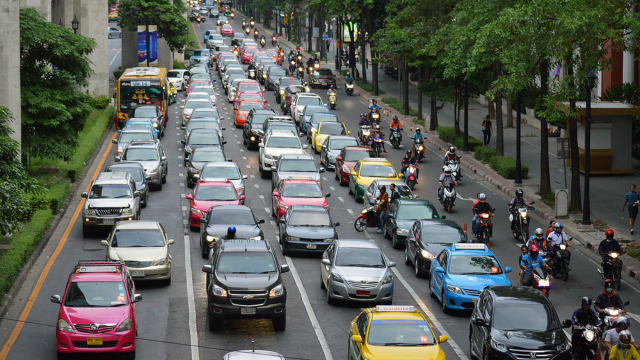
There is no single strategy that solves every road problem.
Different problems require different interventions.
Signal optimisation
Sometimes congestion can be reduced without rebuilding anything.
If signal timings no longer match Traffic Engineer Jobs UK demand, adjusting them can improve performance.
This is relatively inexpensive compared with major construction.
It can also be reversed or modified if circumstances change.
Junction improvement
Where the physical arrangement itself creates the problem, engineers may consider changing lane allocation, turning arrangements, signals or junction geometry.
The design needs to consider more than capacity.
A layout that increases vehicle throughput but makes pedestrian crossing significantly more dangerous would not represent a complete solution.
Public transport priority
Bus lanes and signal priority can help public transport move more reliably through congestion.
This can improve the attractiveness of shared transport and potentially move more people through limited road space.
The relevant measure is therefore not always vehicles per hour.
Sometimes people per hour is more meaningful.
Parking and kerbside management
Roadside space is valuable.
Parking, loading, bus stops, cycle facilities, taxis and pedestrian activity may all compete for it.
Traffic managers need to decide where different uses are appropriate and when restrictions should operate.
Poor kerbside management can create congestion even when the underlying road has adequate capacity.
Demand management
Not every transport problem needs more physical capacity.
Authorities may also consider whether travel demand can be spread across different times, routes or modes.
The effectiveness and acceptability of such measures depend heavily on local circumstances and the alternatives available to travellers.
The Traffic Management Act and Network Management
In England and Wales, the Traffic Management Act 2004 gives local traffic authorities an important network-management duty.
In broad terms, authorities are expected to manage their networks so that Traffic Engineer Jobs UK can move as efficiently as reasonably practicable while taking account of their wider obligations and objectives.
That does not translate into an obligation to maximise private-car speeds.
A local authority may also be pursuing road safety, public transport, active travel, accessibility or environmental goals.
Network management therefore involves balancing objectives.
Authorities also need to think beyond their own boundaries.
Closing a road in one area can push Traffic Engineer Jobs UK onto another authority’s network.
Roadworks planned independently by several organisations can combine to create much greater disruption than any individual project would cause alone.
Coordination is therefore a major part of Traffic Management UK practice.
Temporary Traffic Management
Roadworks create a special challenge because the environment people already know is temporarily changed.
A lane may disappear.
A pedestrian route may move.
Drivers may need to cross into the opposite carriageway.
Workers can be operating only a short distance away from moving traffic.
The Department for Transport’s Traffic Signs Manual Chapter 8 provides core guidance on temporary traffic-management design and operation.
Its purpose includes keeping road users and workers safe while reducing unnecessary delay and confusion.
Temporary schemes need to consider all road users, including pedestrians and cyclists.
A diversion that works perfectly for cars may be unacceptable if somebody using a wheelchair suddenly reaches a closed footway with no accessible alternative.
This is why temporary traffic management is a professional safety discipline rather than simply placing a few cones around an obstruction.
Traffic Management and Road Safety
Safe movement is one of the central purposes of Traffic Engineer Jobs UK.
Great Britain recorded 1,538 road fatalities and 29,918 people killed or seriously injured in reported collisions during 2025.
Although the long-term trend is much better than decades ago, the scale of harm remains substantial.
The 2026 Road Safety Strategy now aims for a 65% reduction in people killed or seriously injured by 2035.
The Safe System approach
A Safe System begins with the assumption that human beings make mistakes.
Instead of expecting perfect behaviour, roads, vehicles and speeds should be managed so that predictable mistakes are less likely to result in death or life-changing injury.
Traffic Engineer Jobs UK can contribute through measures such as safer junction geometry, protected crossings, appropriate speed management and clearer road layouts.
The correct measure depends on the problem.
Installing additional signs is not automatically a safety improvement.
If a junction has repeated serious collisions, engineers should investigate what those collisions have in common.
Perhaps visibility is poor.
Perhaps turning vehicles conflict with pedestrians.
Perhaps actual speeds are much higher than the road environment safely accommodates.
A good intervention addresses the cause rather than simply signalling that a problem exists.
What Skills Does a Traffic Manager Need?
The question What skills does a traffic manager need has no single answer because the title is used differently across highway authorities, consultancies, contractors and transport organisations.
Someone coordinating a local road network may have different responsibilities from a manager overseeing temporary traffic arrangements around major roadworks.
Several abilities are nevertheless consistently valuable.
Analytical judgement
Traffic Engineer Jobs UK managers work with imperfect information.
They may need to interpret congestion data, works programmes, incident reports or competing requests for road space.
The skill lies in deciding what matters and what action is proportionate.
Network awareness
A change rarely affects only one location.
Closing a junction can create queues elsewhere.
Professionals need to understand how routes interact and where displaced traffic is likely to move.
Communication
Traffic management involves coordination between engineers, utility companies, contractors, emergency services, local authorities and road users.
Clear communication reduces misunderstanding, particularly when conditions change quickly.
Safety awareness
Network efficiency never justifies unsafe operation.
Traffic managers need to understand when risks require specialist engineering or safety input rather than improvising a solution.
Digital confidence
Modern network management increasingly depends on data platforms, mapping, control systems and monitoring tools.
The future professional does not need to become a software developer, but understanding how digital systems generate and use information is becoming increasingly useful.
Transportation Planning and Traffic Management
Traffic management deals with how networks operate now.
Transportation planning asks what the network may need in the future.
Suppose a local authority is considering thousands of new homes.
Traffic Engineer Jobs UK planners may estimate how many journeys the development could generate, where those journeys will go and how public transport, walking and cycling provision could influence behaviour.
Traffic Engineer Jobs UK then examine how specific junctions or corridors might cope.
Network managers consider how the resulting infrastructure can be operated.
These disciplines therefore form a continuum rather than independent silos.
A road network cannot be managed effectively in the long term if development continuously creates demand that the transport system cannot handle.
Likewise, planning proposals need an understanding of how real networks operate.
Smart Traffic Management
Smart Traffic Management uses digital information and connected systems to make network operation more responsive.
The concept covers several technologies rather than one product.
Sensors can measure Traffic Engineer Jobs UK conditions.
Control centres can combine information from multiple roads.
Algorithms can adjust signals.
Navigation data may provide another view of congestion.
Digital twins can allow authorities to test possible interventions in a virtual representation before changing the physical network.
Transport data is becoming strategic infrastructure
The Department for Transport’s 2026 Transport Data Action Plan explicitly aims to improve how transport data is used, shared and understood.
That matters because isolated datasets have limited value.
A local authority may have signal data in one system, bus information in another and roadworks data elsewhere.
Connecting those sources can provide a better picture of what is happening.
Data can also improve passenger information.
Someone deciding whether to leave home needs useful information about disruption before they enter the network.
Digital twins
England’s new integrated transport digital-twin programme shows where this could go next.
A digital twin is more than a static computer model.
It can combine a digital representation with current information from the real system so that planners can test decisions and understand likely effects.
A city might explore what happens if a major route closes during an incident.
It could examine how Traffic Engineer Jobs UK redistributes and whether bus routes become unreliable.
The technology can support faster, better-informed decisions.
It still does not make them automatically correct.
AI in Traffic Management
Artificial intelligence can process transport data faster than human teams.
That makes it useful for detecting unusual patterns, predicting congestion or identifying emerging incidents.
AI may also support adaptive signals and network optimisation.
The important question is what the system has been told to optimise.
Imagine an algorithm designed only to minimise average car delay.
It might produce a result that gives pedestrians very little crossing opportunity or undermines bus reliability.
Technically, the algorithm may have succeeded.
From a transport-policy perspective, the outcome may be poor.
Human professionals therefore need to define objectives and evaluate trade-offs.
The future of Traffic Engineer Jobs UKmanagement is likely to involve more automation but also greater need for people who understand what the automated system is actually doing.
Traffic Engineer Jobs UK

People searching for Traffic Engineer Jobs UK will encounter roles in local government, engineering consultancies, infrastructure companies, contractors and transport organisations.
Job titles vary.
A vacancy may be advertised as Traffic Engineer Jobs UKengineer, highways engineer, transport engineer, traffic signals engineer, transport planner or road-safety engineer.
The National Careers Service specifically notes that experienced transport planners can progress into traffic-engineering roles.
Work can involve analysing junctions, developing traffic-management schemes, investigating collisions, producing transport assessments or designing signal and highway improvements.
A career may begin through civil engineering, transport planning, geography or another related discipline.
England also has apprenticeship routes, including the Level 6 Transport Planner integrated-degree apprenticeship.
Professional development can continue through organisations such as CIHT and the Transport Planning Society.
Do You Need a Degree?
Not every role follows exactly the same educational route.
Technician and apprenticeship pathways can provide alternatives to traditional full-time university study.
Professional engineering positions, however, often require substantial technical education and supervised experience.
Someone designing safety-critical road infrastructure needs much more than familiarity with traffic terminology.
For transport-planning careers, the current Level 6 integrated-degree apprenticeship includes a BSc (Hons) in Transport Planning and links with professional recognition.
Civil-engineering pathways can also lead towards Incorporated or Chartered Engineer registration depending on education and experience.
The right route depends on whether the learner wants to become a technician, planner, engineer, network-management professional or specialist in another area.
Learning Traffic Management and Engineering as a Beginner
A beginner should start with the network itself.
Learn how Traffic Engineer Jobs UK flow works and why queues form.
Study basic junction types, traffic signals and road capacity.
Then begin looking at safety, traffic surveys and the principles of network management.
Once those foundations make sense, topics such as modelling and intelligent transport systems become much easier to understand.
A structured introductory programme can help organise those subjects.
For example, Learning Facility’s Traffic Engineering and Management course covers traffic patterns, road-network design, traffic controls, congestion, safety and environmental impacts and has no formal entry qualification.
That can make it useful for students or professionals exploring the field.
Its completion certificate should still be treated as introductory learning.
It does not replace the degree, apprenticeship, specialist training or professional competence that may be required for engineering and safety-critical roles.
Building Practical Traffic Management Skills
Theory becomes much easier to remember once learners begin observing real networks.
Choose a familiar junction and watch it during the morning peak.
Where do queues begin?
Which movement receives the most green time?
Do pedestrians wait through several stages?
Does one approach clear completely while another remains congested?
You can learn a surprising amount simply by asking why.
Then look at temporary arrangements.
Notice how signs are introduced before roadworks and how Traffic Engineer Jobs UK is moved away from workers.
Think about what happens to pedestrians and cyclists.
As technical knowledge develops, students can move into traffic-count data, GIS, signal principles and transport modelling.
The aim is to learn to connect numbers with actual network behaviour.
Traffic Management Strategies for Incidents and Disruption
Not every problem can be planned months in advance.
Collisions, breakdowns, flooding and emergency works can disrupt roads with little warning.
Network managers therefore need incident strategies.
The first priority is safety.
After that, they need to understand network consequences.
Closing one link may require diversions, signal changes and information for road users.
Public transport may need alternative routes.
Emergency services may require access that ordinary traffic cannot use.
Good incident management therefore involves coordination rather than one isolated decision.
Modern control rooms can increasingly bring together live data, CCTV and network information to support this response.
That is one of the most practical applications of Smart Traffic Management.
Why Accessibility Matters
A road network is used by people with very different abilities.
Traffic managers need to think about disabled pedestrians, older people, wheelchair users, people with visual impairments and anyone who may find unfamiliar layouts particularly difficult.
This is especially important during temporary works.
A footway closure that simply directs pedestrians across the road may create a significant barrier for some users.
Likewise, signal timing that provides only a narrow crossing opportunity can affect people who move more slowly.
Accessibility is therefore not separate from traffic management.
It is part of determining whether the network actually works.
Environmental Considerations
Traffic management can also affect environmental outcomes.
Stop-start congestion increases wasted time and energy.
Poorly coordinated roadworks can lengthen journeys and create unnecessary disruption.
At the same time, maximising traffic throughput everywhere can encourage a road network dominated by private vehicles.
Modern traffic practice therefore increasingly sits within broader transport policy.
Bus priority, walking, cycling and low-emission transport can all influence the way road space is managed.
Traffic professionals may consequently need to balance traditional network-performance measures with emissions, public health and place quality.
This is another reason modern traffic engineering cannot be reduced to “making cars go faster”.
Common Traffic Management Mistakes
One common mistake is treating the visible queue as the entire problem.
Queues are symptoms.
The cause could be poor signal coordination, excess turning demand, roadworks, parking activity or another bottleneck further downstream.
Another mistake is solving one junction without considering the rest of the network.
Traffic released more quickly from one signal may simply reach the next queue sooner.
Technology can create similar problems.
Buying sophisticated control software is not automatically Smart Traffic Management if data quality is poor or nobody has defined what the system should achieve.
Finally, training can be misunderstood.
Knowing the principles of traffic management is useful.
Taking professional responsibility for live road arrangements requires the level of competence appropriate to the task.
Those are different things.
The Future of Traffic Management UK
The future of Traffic Management UK is likely to involve more connected systems, richer data and more integrated decision-making.
Traffic control will increasingly be considered alongside public transport and other travel modes rather than as a road-only problem.
England’s Better Connected strategy, for example, places emphasis on integrated journeys, safe and dependable travel and the use of data and technology.
Digital twins could allow authorities to test possible changes before implementing them.
AI could identify patterns and suggest responses faster.
Connected vehicles may eventually communicate more directly with road infrastructure.
None of this makes traditional engineering knowledge obsolete.
It makes understanding the network even more important.
Professionals will need to know when a digital recommendation reflects a genuine improvement and when the model is optimising the wrong objective.
FAQ
What is traffic management?
Traffic management is the planning and control of movement across road networks. It can involve traffic signals, restrictions, roadworks coordination, incident response, diversions, signs and real-time network monitoring.
What is traffic engineering?
Traffic engineering applies engineering and analytical methods to traffic flow, road safety, junction operation and network design. Traffic engineers may analyse data, develop schemes, model future conditions and design traffic-control measures.
What is the difference between traffic management and traffic engineering?
Traffic management tends to focus more heavily on operating and coordinating networks, while traffic engineering analyses and designs the infrastructure and control arrangements that determine how those networks perform. In practice, the disciplines overlap substantially.
What skills does a traffic manager need?
What skills does a traffic manager need? Important abilities include analytical judgement, communication, network awareness, safety awareness, problem-solving and digital confidence. The exact requirements depend on whether the role involves network operations, temporary traffic management, local-authority coordination or another specialism.
What are Traffic Control Systems?
Traffic Control Systems are technologies and physical controls used to regulate movement. Examples include traffic signals, vehicle detectors, CCTV, variable-message signs, control-centre software and coordinated urban traffic systems.
What are common Traffic Management Strategies?
Traffic Management Strategies can include signal optimisation, junction improvements, public-transport priority, parking controls, temporary diversions, incident-management measures and demand-management approaches. The right option depends on the problem and wider transport objectives.
What is Smart Traffic Management?
Smart Traffic Management uses data, sensors, connected infrastructure and digital systems to understand and manage transport conditions more dynamically. Technologies may include adaptive signals, real-time information, predictive analytics and integrated digital twins.
How do I become a traffic engineer in the UK?
Routes commonly include civil engineering, transport planning and related higher education or apprenticeships. Practical experience is important, and experienced professionals may pursue professional recognition through bodies such as CIHT. Requirements vary between employers and roles.
Where can I find Traffic Engineer Jobs UK?
Traffic Engineer Jobs UK can be found across councils, engineering consultancies, transport organisations, infrastructure companies and contractors. Related vacancies may use titles such as highways engineer, transport engineer, traffic signals engineer, transport planner or road-safety engineer.
Is an online traffic-management course enough to become a traffic engineer?
No. An introductory course can explain principles and provide useful foundation knowledge, but professional traffic-engineering and safety-critical work generally requires substantially deeper technical education, experience and competence. Course completion should not be represented as professional engineering registration.

Conclusion
Traffic Management and Traffic Engineering are ultimately about making complex road networks work for real people.
Traffic engineers analyse how those networks behave. They examine flow, junctions, safety and future demand before designing improvements. Traffic managers then deal more directly with keeping the network operating, coordinating disruption and responding when everyday conditions change.
Those responsibilities increasingly depend on sophisticated Traffic Control Systems, but technology does not remove the need for professional judgement. Signals, cameras, sensors and digital twins produce information. People still need to decide what the network should achieve.
That is why the strongest Traffic Management Strategies balance efficiency with safety, accessibility, public transport and the needs of surrounding communities.
For beginners, a course such as Learning Facility’s Traffic Engineering and Management programme can provide a useful overview before more specialised study. People moving towards professional Traffic Engineer Jobs UK should then explore civil engineering, transport planning, apprenticeships, workplace experience and recognised professional-development routes.
The next stage of Traffic Management UK will be increasingly digital. Real-time information, AI and Smart Traffic Management will allow networks to respond more intelligently to congestion and disruption.
Yet the fundamental professional challenge will remain the same: understand how people and vehicles move, recognise where the system is failing and choose an intervention that makes the network safer and more effective as a whole.