
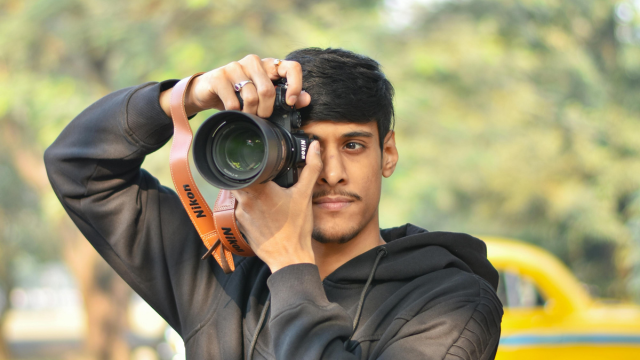

Understanding how to become a photographer in the UK begins with recognising that photography is both a creative discipline and a commercial service. Taking an attractive photograph is important, but professional photographers must also interpret briefs, work with clients, manage lighting, edit images, protect files, meet deadlines and run reliable business processes.
There is no single compulsory qualification or licence that turns someone into a photographer. People enter the profession through university, college, apprenticeships, online photography courses, assisting established photographers or building experience independently. Whichever route you choose, employers and clients will normally want to see a convincing portfolio rather than certificates alone.
Photography is also a broad profession. A wedding photographer works very differently from a product photographer, photojournalist, school photographer or specialist in UK landscape photography. The equipment, working hours, pricing and legal considerations can vary considerably.
This guide explains the skills, training routes, career options and financial realities involved. It also covers uk landscape photography compositions, exposure, editing, copyright, self-employment and the practical steps required to turn an interest in images into credible professional work.
What does a professional photographer do?
A photographer plans, captures, selects and processes images for a particular purpose.
The work usually begins before the camera is used. A commercial photographer may discuss the client’s objectives, intended audience, visual style, location, deadline and permitted uses of the images. A portrait photographer may help the subject choose clothing, poses and backgrounds. A landscape photographer may research weather, access, sunrise times and environmental conditions.
During the shoot, the photographer controls or responds to light, composition, perspective, focus, movement and timing. After the session, they organise files, make backups, select the strongest images and complete appropriate editing.
The National Careers Service identifies discussing briefs, preparing locations, setting up lighting, taking photographs, editing images and checking colour and quality as common duties. It also notes that photographers may work outdoors in difficult conditions and at evenings, weekends or bank holidays when clients require them.
Professional work also includes administration. Freelancers prepare quotations, contracts and invoices, respond to enquiries, schedule sessions and market their services. The time spent behind a computer can sometimes exceed the time spent taking photographs.
Is photography a good career in the UK?
Is photography a good career in the UK? It can be a rewarding career for someone who enjoys visual problem-solving, working with people and continually developing both technical and commercial skills.
Photography offers considerable variety. A photographer may work in advertising, fashion, property, sport, education, events, journalism, healthcare, science, heritage or environmental communication. Self-employment can also provide control over clients, schedule and creative direction.
The career has genuine challenges. Competition is strong, freelance demand can fluctuate and equipment can be expensive. Photographers may work early mornings, evenings and weekends, particularly in weddings, events, property and outdoor uk landscape photography. The creative part of the job must also be balanced with sales, editing and administration.
A good career decision therefore depends on more than enjoying uk landscape photography as a hobby. You should consider whether you are willing to:
- Work to another person’s brief rather than only your own ideas;
- Accept constructive criticism and make revisions;
- Communicate clearly with clients and subjects;
- Maintain consistent standards under time pressure;
- Market your services and manage uncertain income;
- Continue learning as technology and client expectations change.
Photography may be particularly satisfying for someone who enjoys combining creativity with practical organisation. It may be less suitable for someone who wants guaranteed hours, predictable demand or complete artistic freedom from the beginning.
How much are photographers paid in the UK?
How much are photographers paid in the UK? The National Careers Service currently gives an indicative range of £17,000 for a starter to £45,000 for an experienced photographer. It describes working hours as variable and states that freelance work is common.
These figures should be treated as broad career guidance. A salaried studio assistant, experienced commercial photographer and self-employed wedding photographer do not have the same income structure.
Freelancers usually charge per session, day, image, project or licensing arrangement. Their sales revenue is not the same as personal earnings. Business income may need to cover:
- Cameras, lenses and lighting;
- Computers, software and data storage;
- Insurance;
- Travel and accommodation;
- Studio or location costs;
- Website hosting and advertising;
- Professional services and tax;
- Time spent consulting, editing and administering projects.
A photographer who invoices £40,000 in a year does not necessarily earn £40,000 after business costs and tax.
Rates also depend on specialism, experience, reputation, region, client type and the rights granted. A small portrait session for a private customer should not automatically be priced in the same way as a national advertising campaign using images across several platforms.
New photographers should research their market and calculate the complete cost of providing the service. Copying the cheapest local competitor can produce a price that does not cover the time or expenses involved.
Main photography career options
Photography contains many specialisms. Exploring several areas initially can help you identify the combination of subject, environment and working style that suits you.
| Photography area | Typical work | Important additional skills |
| Portrait and family | Individual, family and personal-brand sessions | Posing, communication and client care |
| Wedding and events | Ceremonies, celebrations and corporate events | Timing, backup planning and low-light work |
| Commercial and product | Products, advertising and online retail | Lighting, colour accuracy and client briefs |
| Property and architecture | Homes, workplaces and developments | Wide-angle control, perspective and scheduling |
| Press and documentary | News, features and social stories | Accuracy, ethics, captions and rapid delivery |
| Landscape and environment | Natural places, conservation and travel | Weather planning, access awareness and patience |
| Fashion | Clothing, models and editorial campaigns | Teamwork, styling and creative direction |
| Medical and scientific | Clinical, research and technical images | Specialist training, accuracy and confidentiality |
Portrait photography
Portrait photographers create images of individuals, families, performers, professionals and organisations.
Technical knowledge matters, but the ability to help people feel comfortable is equally important. Subjects may be nervous or unfamiliar with being photographed. Clear direction normally produces better results than expecting the person to know how to pose.
Commercial portraits may also need to fit a brand. A corporate headshot for a law firm will usually require a different treatment from an actor’s portfolio or musician’s promotional image.
Wedding and event photography
Wedding and event work requires consistency under conditions the photographer cannot fully control.
Important moments may happen once. The photographer therefore needs reliable equipment, backups and a clear plan. They must also work discreetly, manage groups and deliver images within the agreed timeframe.
Demand can be seasonal, and weekend work is common. Editing hundreds or thousands of photographs after an event can make the total workload much larger than the visible shooting time.
Beginners should avoid accepting sole responsibility for an important wedding before they can manage changing light, equipment failure and time pressure. Assisting or working as a second photographer provides safer experience.
Commercial and product photography
Commercial photographers create images that help organisations communicate or sell.
The client may require precise colours, consistent angles, clean backgrounds or a particular brand style. Product uk landscape photography can range from simple catalogue images to complex advertising sets involving stylists, assistants and retouchers.
Commercial value depends not only on technical quality but on whether the image meets the brief. An artistic photograph may still fail if it leaves no space for text, hides an important product feature or does not match the intended platform.
Property and architectural photography
Property photographers work for estate agents, architects, developers, hotels and interior designers.
They need to represent spaces attractively without creating misleading impressions. Skills include balancing indoor and outdoor light, controlling vertical lines and producing consistent coverage efficiently.
Access, weather and occupant privacy must be managed carefully. The photographer should establish what may be moved, which areas are excluded and whether people or confidential information should appear.
Press, documentary and environment photography
Documentary photography records people, events and issues with an emphasis on truthful visual communication.
Environment photography may document pollution, conservation, climate adaptation, farming, wildlife, communities or the relationship between people and landscapes. The photographer may work for charities, publishers, research projects or public bodies.
This work requires more than dramatic images. Accurate captions, context and ethical representation matter. Editing should not materially misrepresent what occurred.
A documentary photographer should consider the potential effect of publication on identifiable people. Sensitive situations may require careful consent, safeguarding and editorial judgement.
UK landscape photography
UK landscape photography includes mountains, coasts, countryside, woodland, cities and industrial environments.
Success depends less on owning the most expensive camera than on planning and observation. Weather, tide, season, direction of light and access can transform the same location.
Photographers must respect property boundaries, temporary restrictions and the Countryside Code. A public right of way does not automatically permit access to every nearby field, cliff, building or viewpoint.
Responsible landscape work also means leaving the location undamaged. Moving barriers, trampling vegetation or blocking paths to improve a composition is not professional practice.
Wildlife should not be disturbed for an image. Certain protected-species uk landscape photographymay require a licence where disturbance cannot be avoided. The welfare of the subject should take priority over obtaining the shot.
Do you need qualifications to become a photographer?
There is no universal requirement to hold a uk landscape photographydegree before offering services.
Qualifications can nevertheless provide structured teaching, access to equipment, critical feedback and time to develop a portfolio. They may also be useful where an employer requires higher education or specialist technical knowledge.
The best route depends on your preferred method of learning, finances and career target.
College courses
Colleges may offer uk landscape photography within art and design programmes or as a separate subject.
A good college course should provide practical assignments, image editing, lighting, portfolio development and constructive assessment. Access to studios, printers and equipment can help learners experiment before buying their own complete kit.
Check the exact qualification and progression route. A short introduction, A level, vocational diploma and higher national qualification have different purposes.
How to become a photographer in the UK? University degrees
Relevant university options include photography, commercial photography, visual arts, photojournalism and art and design.
A degree can provide several years of critical and creative development. Students may explore photographic history, contemporary practice, professional projects and extended portfolios.
The value depends heavily on how the opportunity is used. Graduating with a degree but no portfolio, client experience or understanding of business may leave someone less prepared than a non-graduate who has built strong practical evidence.
Before applying, compare course facilities, tutors, specialist modules, industry links, placements, graduate work and complete study costs. The National Careers Service identifies foundation degrees, HNDs and degrees as possible routes but does not present university as compulsory.
Photographer apprenticeship
In England, the Level 4 Photographer apprenticeship combines employment with structured learning.
Skills England gives the current standard a typical on-programme duration of approximately 18 months, followed by end-point assessment. Apprentices develop occupational knowledge, skills and behaviours while working for an employer.
An apprenticeship is a paid job rather than a course place that can be entered independently. Vacancies depend on employers and may be less common than apprenticeships in larger industries.
Apprenticeship arrangements differ in Scotland, Wales and Northern Ireland. Applicants should use the official service for the nation where the employment is based.
Higher technical qualifications
Skills England currently lists a Pearson BTEC Level 4 HNC in uk landscape photographyfor England as an approved Higher Technical Qualification aligned with the Photographer occupational standard.
An HNC may suit someone seeking applied higher education without immediately committing to a full degree. Progression arrangements differ, so learners should confirm whether a university will accept the qualification for advanced entry.
Online photography courses
Online photography courses can provide an accessible way to learn exposure, composition, editing and visual analysis.
The Open University currently offers a ten-week digital uk landscape photography course developed with the Royal Photographic Society. It uses weekly practical assignments, peer engagement and an assessed final submission. Successful learners may also obtain an RPS Certificate in uk landscape photography under the stated arrangements.
The RPS provides online and in-person workshops and supports several educational routes. Its courses, certificates and Distinctions can create useful development goals, but learners should distinguish them from regulated academic or vocational qualifications.
A valuable online course should require the learner to take photographs, evaluate results and respond to feedback. Watching videos without completing practical assignments is unlikely to produce a professional portfolio.
Essential technical photography skills
Understanding exposure
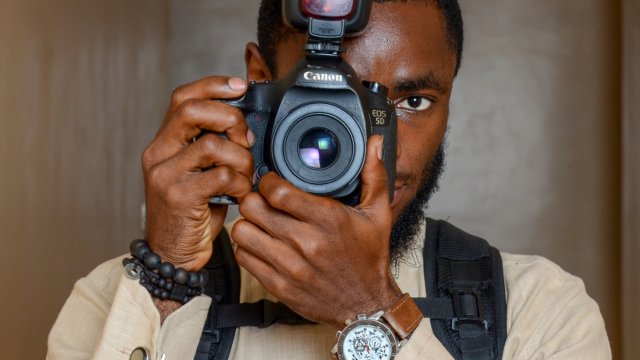
Exposure determines how much light is recorded in a photograph. It is controlled through aperture, shutter speed and ISO.
Aperture is the opening through which light enters. A wider aperture allows more light and can create a shallower depth of field, while a narrower aperture may keep more of the scene acceptably sharp.
Shutter speed controls how long the image is exposed. A fast shutter can freeze movement, while a slower shutter may show motion blur. Slow speeds also increase the risk of blur from camera movement unless the camera or photographer is suitably supported.
ISO controls the camera’s sensitivity setting. Increasing it can help in low light, but higher values may reduce image quality through additional noise and loss of detail.
The three controls work together. Changing one may require adjustment of another to maintain the intended brightness.
The phrase exposure photography is sometimes used by beginners, although exposure is not a separate genre. It is a foundation of nearly every form of uk landscape photography. The creative decision is not always to produce a conventionally bright image; it is to choose settings that preserve the important tones and support the intended result.
Focus and depth of field
Focus directs attention and determines which parts of the image appear sharp.
Depth of field describes the range of distance that appears acceptably sharp. Aperture, subject distance, focal length and viewing conditions can all influence it.
Portrait photographers may use shallow depth of field to separate a person from the background. Landscape photographers may want greater depth so that both foreground and distance remain clear.
Autofocus systems are powerful, but the photographer must still select the right mode and focus point. Allowing the camera to choose automatically can place sharpness on the wrong face or object.
Working with light
Photography records light, so learning to recognise its direction, quality and colour is more important than memorising equipment specifications.
Soft light produces gradual transitions between highlights and shadows. Hard light creates stronger edges and contrast. Neither is universally better.
A window can provide excellent portrait light. Reflectors can redirect existing light, while flash allows the photographer to create or modify light when natural conditions are unsuitable.
Beginners should practise with one light source before attempting complicated multi-light setups. Understanding why a shadow appears is more useful than copying a diagram without being able to adapt it.
Photography compositions
Strong uk landscape photography compositions organise visual elements so that the viewer understands what matters.
Useful principles include balance, leading lines, framing, repetition, negative space, contrast and the relationship between foreground and background. The rule of thirds can help beginners move subjects away from the centre, but it is a guide rather than a law.
Composition often improves through physical movement. A small change in camera height or position may remove a distracting object, separate overlapping subjects or strengthen a leading line.
The edges of the frame deserve as much attention as the centre. Cut-off limbs, bright distractions and objects appearing to grow from a subject’s head are common mistakes that can often be corrected before taking the picture.
A photographer should also understand when to break a familiar rule. Symmetry, central placement or deliberate imbalance can be effective when chosen consciously.
Image editing
Editing is part of modern uk landscape photography, but it should support rather than rescue careless work.
Basic editing may include exposure correction, colour adjustment, cropping, sharpening and removal of temporary sensor marks. Different genres permit different levels of manipulation.
Commercial product work may involve detailed retouching. Documentary and news photography normally require stricter limits because major changes could mislead the audience.
Photographers need an organised workflow. Files should be imported, backed up, selected, edited, exported and archived consistently. A single memory card should never be treated as a reliable long-term storage system.
Building a professional portfolio
A portfolio should show the type and standard of work you want to be hired to produce.
Twenty strong and connected images are normally more convincing than one hundred inconsistent photographs. Remove work that no longer represents your current ability.
A portrait portfolio should demonstrate control of people, light and expression. A product portfolio should show accuracy and consistency. A landscape collection should reveal more than a series of attractive locations; it should demonstrate observation, weather awareness and visual intention.
Beginners can create self-directed briefs. You might photograph a local café as though preparing images for its website, produce a portrait series for a performer or document an environmental issue with accurate captions.
Only include work you have permission to publish. A private client’s photograph should not automatically appear in your marketing portfolio simply because you took it. Contracts and release arrangements should explain what uses have been agreed.
Starting as an assistant
Working as a uk landscape photography assistant can provide practical insight into professional standards.
Assistants may prepare equipment, manage cables, adjust lights, organise files, help subjects and keep the session running smoothly. They can observe how experienced photographers communicate with clients and respond when conditions change.
The role is not merely carrying equipment. Reliability, discretion and anticipation are highly valued.
An assistant should respect confidentiality and should not publish behind-the-scenes photographs without permission. Commercial shoots may involve products, campaigns or people that have not yet been publicly announced.
The National Careers Service identifies assisting and working upwards as an established entry route.
Becoming a self-employed photographer
Many professional photographers work as sole traders or through limited companies.
A freelancer should separate personal enthusiasm from business planning. Decide what service you provide, who purchases it and why they should choose you.
A basic business plan should consider pricing, target customers, local competitors, marketing channels, equipment, insurance and expected monthly costs.
Photographers trading as sole traders must keep appropriate records and may need to register for Self Assessment. GOV.UK currently states that registration is generally required where gross self-employed trading income exceeds £1,000 in a tax year, subject to the applicable rules and circumstances.
Business records should distinguish money received from actual profit. Set aside funds for tax rather than assuming every client payment is available to spend.
Insurance needs depend on the work. Photographers may consider cover for equipment, public liability, professional risk and business interruption. Venues or clients may require evidence of particular insurance before allowing a shoot.
Contracts, copyright and image licensing

A written agreement should explain the service, price, payment dates, delivery, cancellation terms and responsibilities of both parties.
It should also address image use. Copyright ownership and the licence granted to the client are not identical.
The Intellectual Property Office explains that a freelance creator will generally be the first copyright owner unless ownership is transferred. Where an employee creates photographs during employment, the employer will generally own copyright unless an agreement states otherwise.
A licence gives someone permission to use photographs under defined conditions. It might permit use on a business website for a specified period without transferring the copyright itself.
Commercial photographers should price with the intended use in mind. A local brochure and an international advertising campaign can create very different value.
Contracts should also explain editing, delivery dates, archive periods and what happens if illness, weather or equipment failure prevents performance.
Photographing people and protecting data
Photography involving identifiable people may engage privacy and data-protection considerations, particularly where images are collected and used commercially or systematically.
Professional photographers should explain how images will be used, stored and shared. Files should be protected against unauthorised access, and material that is no longer required should be handled according to the photographer’s legitimate business and legal needs.
Consent forms or model releases can clarify agreed uses. However, the correct legal basis and documentation depend on the circumstances, so a template should not be treated as universal legal advice.
Extra care is required when photographing children or vulnerable people. Appropriate permission, safeguarding procedures and client policies should be established before the session.
Drone and aerial photography
Drones have created opportunities in property, construction, tourism and landscape uk landscape photography
Operating one commercially does not remove the ordinary aviation rules. Current CAA requirements depend on the drone’s weight or class, whether it has a camera, where it is flown and how close it comes to people and places.
Under the rules checked in July 2026, many camera drones of 100 grams or more require both a Flyer ID and an Operator ID. More advanced operations may require additional competency or CAA authorisation. New aircraft placed on the market from 1 January 2026 are also subject to the UK class-mark system described by the CAA.
Photographers must check airspace restrictions, landowner permission, privacy, insurance and separation rules before a flight. The fact that an aerial image would improve a portfolio is not a reason to fly unlawfully or unsafely.
A practical career path for beginners
Begin by learning manual exposure, focus, light and composition with the equipment you already have. A capable camera phone or entry-level camera can teach these principles.
Next, complete regular projects rather than waiting for exceptional locations. Photograph one subject under different light, create a short portrait series or document changes in a local area.
Study your results critically. Identify why a particular photograph works and what weakens another. Feedback from tutors, working photographers and serious peer groups can accelerate development.
Build a focused portfolio and gain controlled experience. Assist professionals, volunteer for suitable community projects or complete low-risk self-directed briefs.
Then choose a specialism or client group. You do not need to remain in one area forever, but clear positioning makes marketing easier.
Finally, create reliable business systems before accepting important paid work. Contracts, backups, insurance, invoicing and communication are part of being professional.
Common mistakes new photographers make
One mistake is buying equipment before identifying what problem it will solve. A new lens cannot replace weak lighting, composition or communication.
Another is editing every image heavily. Strong editing begins with deliberate capture and supports the subject rather than hiding technical errors.
Beginners may also imitate popular styles too closely. Inspiration is useful, but a career becomes more sustainable when the photographer develops a recognisable approach and solves real client needs.
Underpricing is another serious problem. Charging only for the hour spent taking photographs ignores consultation, travel, editing, storage and business costs.
Finally, some new photographers take on responsibilities beyond their experience. An important event, protected wildlife assignment or complex drone project should not be used as unsupervised practice.
Frequently asked questions
Do I need a degree to become a photographer in the UK?
No. You can enter through college, an apprenticeship, assisting, online study or independent portfolio development. A degree may provide structured development and professional connections but is not compulsory for most photography work.
Is photography a good career in the UK?
It can be a good career for someone with creative, technical, client-service and business skills. The field is competitive, and freelance income may fluctuate, so realistic planning is essential.
How much are photographers paid in the UK?
The National Careers Service currently gives a broad employed range of £17,000 to £45,000. Freelance revenue varies considerably and must cover business expenses before personal earnings are calculated.
Can online photography courses help me get work?
They can develop technical skills and provide useful feedback. Employers and clients will still judge the quality and relevance of your portfolio, reliability and experience.
What camera should a beginner buy?
Choose a camera that allows suitable control and fits the type of work you want to practise. Learn with existing equipment before purchasing an expensive professional system.
How long does it take to become a professional photographer?
There is no fixed period. Technical basics can be learned relatively quickly, but consistent professional quality, client management and a viable business normally require continuing practice and experience.
Can I become a landscape photographer full-time?
It is possible, but print and stock sales alone may be unpredictable. Landscape photographers may combine licensing, workshops, assignments, publishing, tourism work and commercial content.
Do photographers own their images?
Freelance photographers will generally be the first copyright owners unless rights are transferred. Employers will usually own images created by employees in the course of employment, subject to any agreement.
Do I need permission to photograph wildlife?
Ordinary responsible photography may not require a special licence, but disturbing certain protected species can require one. Check the rules applicable to the species and UK nation before approaching sensitive sites.
Can photography courses guarantee employment?
No. Courses can develop knowledge and provide qualifications or feedback, but employment depends on portfolio quality, experience, demand, communication and business ability.
Conclusion
Learning how to become a photographer in the UK involves developing technical skill, visual judgement and professional reliability.
There is no compulsory route. College, university, apprenticeships, assisting and online photography courses can all contribute, but the portfolio remains central. It should demonstrate the type of work you want to obtain and show that you can produce consistent results rather than occasional successful images.
Beginners should master exposure photography principles, focus, lighting and photography compositions before investing heavily in equipment. They should then develop a specialism, gain supervised experience and understand the practical responsibilities attached to paid work.
Photography can be a good UK career, but it is competitive and often commercially demanding. Earnings depend on specialism, experience, employment status and the ability to attract and retain clients.
Whether your interest lies in portraits, commercial work, UK landscape photography or environment photography, professional progress comes from deliberate practice, ethical behaviour and dependable business systems. A photographer is not simply someone who owns a camera. A professional is someone who can understand a purpose, create appropriate images and deliver them responsibly.