

Health and Safety Awareness Training gives employees and employers a practical foundation for recognising workplace hazards, understanding risks and knowing what to do when something appears unsafe. It is relevant far beyond factories, construction sites and warehouses. Offices, shops, schools, care settings, hospitality businesses and remote workplaces all have Health and Safety for Employees responsibilities.
For beginners, the subject can seem complicated because UK workplace safety is governed by several pieces of legislation rather than one universal checklist. The basic principle is much simpler: identify what could harm people, understand the level of risk, put sensible controls in place and make sure workers know how to follow them.
General awareness training can support this process, but its limits matter. Completing an introductory course does not automatically qualify someone to undertake specialist risk assessments, operate dangerous machinery, remove asbestos, inspect lifting equipment or perform another safety-critical task requiring additional competence.
This guide explains Health and Safety for Employees, the main Health and Safety Regulations UK workplaces should understand, risk assessment, common hazards, employee responsibilities and why is health and safety awareness important in everyday work.
What Is Health and Safety Awareness?
Health and safety awareness means recognising that work activities can create risks and understanding how those risks should be controlled.
A worker with good safety awareness does not need to be a professional Health and Safety for Employees adviser. They should, however, understand the hazards relevant to their work and know the precautions they are expected to follow.
For example, an office employee should know how to report a damaged electrical cable, what to do during a fire alarm and how their workstation should be adjusted.
A warehouse employee may need additional awareness of vehicles, manual handling, falling objects and storage systems.
A laboratory worker may need detailed instructions concerning hazardous substances.
The level of knowledge required therefore depends on the work.
Health and Safety for Employees awareness should help employees understand four basic questions:
- What could cause harm?
- Who could be harmed?
- What controls are in place?
- What should I do if something goes wrong?
These questions provide a useful starting point for Health and Safety for Beginners.
Why Is Health and Safety Awareness Important?
If you are asking why is Health and Safety for Employees awareness important, the most direct answer is that rules only protect people when they are understood and applied.
A business may have an excellent written risk assessment, but it provides little protection if employees do not know that a machine guard must remain in place or that a chemical requires specific handling precautions.
Awareness can help workers identify hazards before they become incidents.
It can also encourage earlier reporting.
A small water leak may initially appear insignificant. If it creates a slippery floor in a busy corridor, however, reporting it quickly can prevent someone from falling.
The same principle applies to damaged equipment, blocked fire exits, defective PPE, unsafe lifting practices and excessive workloads.
Good awareness also supports communication between managers and employees. Workers often understand practical hazards that are difficult to identify from an office or management report because they perform the task every day.
Health and Safety for Employees therefore works best as an active management process rather than a document produced once and forgotten.
Health and Safety at Work: The Main Legal Framework
The Health and Safety at Work etc. Act 1974 is the central piece of occupational Health and Safety for Employees legislation applying across Great Britain.
It establishes broad duties rather than prescribing a separate detailed rule for every workplace activity.
Employers have a general duty, so far as reasonably practicable, to ensure the health, safety and welfare of employees.
That includes matters such as safe systems of work, safe equipment, appropriate information and training, and a working environment that is safe and without unnecessary risks to health.
Employers can also owe duties to people who are not employees but who may be affected by their work.
Depending on the workplace, this might include customers, contractors, visitors or members of the public.
The 1974 Act is supported by more detailed regulations dealing with particular areas of workplace safety.
Health and Safety Regulations UK Employers Should Know
There is no short list that covers every organisation because the applicable law depends on the work performed.
However, several important pieces of legislation frequently form part of workplace Health and Safety for Employees management in Great Britain.
Management of Health and Safety at Work Regulations 1999
These regulations are particularly important because they require employers to assess risks and organise suitable arrangements for managing workplace health and safety.
Risk assessment is therefore not an optional management exercise.
Workplace (Health, Safety and Welfare) Regulations 1992
These regulations address basic workplace conditions such as ventilation, temperature, lighting, cleanliness, traffic routes, workstations and welfare facilities.
They apply to most workplaces, although some workplaces and activities have specific alternative regimes.
Provision and Use of Work Equipment Regulations 1998
PUWER concerns the safety and suitability of work equipment.
Where equipment creates risks, employers need appropriate measures concerning matters such as maintenance, inspection, guarding, controls, information and training.
Manual Handling Operations Regulations 1992
These regulations concern risks from manual handling.
The aim should be to avoid hazardous manual handling where reasonably practicable, assess unavoidable handling and reduce the resulting risk.
Control of Substances Hazardous to Health Regulations 2002
COSHH applies where work involves substances that can harm health.
Employers need to assess exposure and use suitable controls.
Personal Protective Equipment at Work Regulations 1992
Where risks cannot be adequately controlled by other means, appropriate PPE may be needed.
Changes effective from April 2022 extended relevant PPE duties to certain workers as well as conventional employees.
PPE should not automatically be the first solution. Removing or controlling a hazard at source is generally preferable where reasonably practicable.
Reporting of Injuries, Diseases and Dangerous Occurrences Regulations 2013
RIDDOR requires specified workplace incidents to be reported to the relevant enforcing authority.
Not every cut, fall or absence from work is automatically reportable. The incident must meet the legal reporting criteria.
These are only examples of Health and Safety Regulations UK employers may encounter. Work involving construction, asbestos, lifting equipment, work at height, pressure systems, dangerous substances and other specialist hazards can bring additional regulations into play.
Northern Ireland Health and Safety Law
UK-focused Health and Safety for Employees information needs an important jurisdictional distinction.
TheHealth and Safety for Employeesat Work etc. Act 1974 described above applies principally in England, Scotland and Wales.
Northern Ireland has its own framework, particularly the Health and Safety at Work (Northern Ireland) Order 1978 and supporting regulations.
The practical principles are similar.
Employers need to identify and control risks, provide suitable information and training, consult workers and maintain appropriate working conditions.
Northern Ireland’s regulator is the Health and Safety for Employees Executive for Northern Ireland, commonly called HSENI.
Businesses should therefore use the legislation and regulator applicable to where they operate rather than assuming that every GB statutory instrument applies identically across the entire UK.
Understanding Hazards and Risks
One of the first concepts in Health and Safety Awareness Training is the difference between a hazard and a risk.
A hazard is something with the potential to cause harm.
A risk considers the likelihood that the harm will occur and how serious the consequences could be.
For example, a wet floor is a hazard.
The risk depends on the circumstances.
A small wet area inside a locked storeroom may create a relatively limited immediate risk. The same wet surface at the top of a busy staircase could create a much more serious situation.
Risk management therefore involves more than creating a list of hazards. Employers need to understand who could be affected, how harm might occur and what controls are proportionate.
How Workplace Risk Assessment Works

HSE’s current approach can be summarised through five practical stages:
- identify hazards;
- assess the risks;
- control the risks;
- record significant findings;
- review the controls.
Identify the Hazards
Look at how work is actually performed.
Potential sources of harm may include equipment, substances, vehicles, electricity, manual handling, work at height, poor housekeeping or working practices.
Previous accidents, near misses and employee feedback can also reveal hazards that are not immediately obvious.
Consider Who Could Be Harmed
Employees may not be the only people exposed.
Consider contractors, visitors, members of the public and anyone with particular vulnerabilities.
Young workers, inexperienced workers, pregnant workers and people with particular disabilities may sometimes require additional consideration depending on the hazard.
Evaluate and Control the Risk
The next question is what can reasonably be done to prevent harm.
Where possible, eliminate the hazard.
If elimination is not practicable, consider whether the work can be redesigned, a safer substance or process used, exposure reduced or physical safeguards introduced.
PPE may be necessary where residual risk remains, but it should not become an automatic substitute for better controls.
Record Significant Findings
Where an employer has five or more employees, significant findings from the risk assessment must be recorded.
The record should identify the significant hazards, who might be harmed and the controls being used.
The objective is useful risk management rather than excessive paperwork.
Review the Controls
Risk assessment is not finished once a form is signed.
Controls should be reviewed where they may no longer be effective and when changes introduce new risks.
A review may also be appropriate after an accident, near miss or concern raised by a worker.
Do Businesses Need a Written Health and Safety Policy?
Every business needs arrangements for managing Health and Safety for Employees.
In Great Britain, employers with five or more employees must put their Health and Safety for Employees policy in writing.
HSE recommends that a written policy contains three main elements.
The first is a statement of intent, explaining the organisation’s overall approach and commitment.
The second identifies responsibilities, so employees know who is responsible for different parts of Health and Safety for Employees management.
The third explains the arrangements used in practice, such as risk assessments, training, first aid and equipment controls.
The policy should reflect the actual business.
Copying another company’s document and changing the name provides little value if the stated arrangements bear no relationship to what happens in the workplace.
Health and Safety for Employees
Health and Safety for Employees is not based solely on employer responsibility.
Employees have legal duties too.
Under section 7 of the Health and Safety at Work etc. Act 1974, employees must take reasonable care of their own health and safety and that of other people who may be affected by what they do or fail to do.
They must also cooperate with their employer so that legal Health and Safety for Employees duties can be fulfilled.
In practical terms, employees should:
- follow relevant safety instructions;
- use equipment correctly;
- use required PPE properly;
- report defects and hazards;
- avoid bypassing safety devices;
- attend relevant training;
- cooperate with emergency procedures.
Section 8 of the Act also prohibits intentionally or recklessly interfering with or misusing something provided in the interests of health, safety or welfare.
Responsibility is therefore shared, although the employer remains responsible for fulfilling the legal duties placed on the business.
Information, Training and Supervision
Employers must ensure that workers receive appropriate information, instruction, training and supervision.
The amount depends on risk.
An employee working in a low-risk office may need relatively straightforward instructions about fire procedures, workstation arrangements and common hazards.
Someone operating machinery needs much more specific training.
HSE states that employees should understand:
- the hazards associated with their work;
- the risks those hazards create;
- the controls in place;
- applicable emergency procedures.
Training should be understandable and relevant.
Employees with particular training needs can include new recruits, people changing roles, workers receiving additional responsibilities and young people.
Supervision matters as well.
Providing someone with a training presentation and then allowing them to perform unfamiliar high-risk work unsupervised may not be sufficient.
Necessary health and safety training must be provided free to employees and during working hours.
Health and Safety for Beginners: Common Workplace Hazards
The risks in a workplace depend on the industry, but several hazards appear across many organisations.
Slips and Trips
Wet surfaces, loose cables, uneven flooring and objects left in walkways can cause falls.
Good housekeeping and prompt reporting are simple but important controls.
Manual Handling
Moving boxes, equipment, stock or people can cause musculoskeletal injury.
Good manual-handling management begins by considering whether the task can be avoided or changed rather than assuming training alone solves the problem.
Work Equipment
Damaged, unsuitable or poorly guarded equipment can create serious risks.
Employees should use equipment only where they have appropriate information, instruction and competence.
Electricity
Damaged plugs, cables, sockets and unsuitable electrical equipment can create fire and electric-shock risks.
Workers should know how to report defects rather than attempting unauthorised repairs.
Hazardous Substances
Cleaning chemicals, dust, fumes, biological agents and industrial substances can cause harm.
Controls depend on the substance and exposure.
Work at Height
Falls from ladders, platforms, roofs and other elevated locations can cause severe injuries.
Specialist work-at-height requirements apply, and general awareness training is not a substitute for appropriate planning and competence.
Workplace Stress
Health and Safety for Employees includes health as well as physical accidents.
Work-related stress can become a health risk and should be managed appropriately where relevant.
Workplace Welfare and Basic Conditions
Safe work requires more than preventing dramatic accidents.
HSE guidance requires appropriate workplace facilities and conditions.
Depending on the workplace, workers should have access to suitable toilets and washing facilities, drinking water and somewhere appropriate to rest and eat meals.
Working environments should also provide suitable ventilation, reasonable temperatures, adequate lighting, sufficient space and appropriate cleanliness.
Traffic routes and floors need to be maintained and kept free from avoidable hazards.
These basic conditions are part of workplace Health and Safety for Employees rather than optional employee benefits.
Fire and Emergency Awareness
Employees need to know what to do during emergencies.
At a minimum, workplace instruction may need to explain:
- how to raise an alarm;
- evacuation routes;
- assembly arrangements;
- who has relevant emergency responsibilities;
- how to contact emergency services.
Fire-safety legislation differs across UK jurisdictions, so organisations need to follow the rules applying to their location and premises.
Training should also be realistic.
Knowing that a fire-exit sign exists is different from understanding which route to take and what to do if the usual exit cannot be used.
Employees should never be encouraged to take unnecessary personal risks when responding to an emergency.
First Aid at Work
Employers must provide first-aid arrangements appropriate to their workplace.
HSE requires employers to assess their first-aid needs by considering factors such as the workplace, workforce and hazards.
Provision may include an appropriate first-aid kit, facilities, an appointed person and suitably trained first-aiders where the assessment identifies that they are necessary.
Employees should be told what the arrangements are.
A general health and safety course can explain the importance of first aid, but it does not automatically make someone a qualified workplace first-aider.
Where first-aid competence is needed, the individual should undertake appropriate first-aid training.
Reporting Accidents and Near Misses
Workers should know how their organisation expects accidents and near misses to be reported.
Internal reporting helps the organisation understand what happened and whether controls need changing.
For example, nobody may be injured when a heavy object falls from storage.
That does not mean the event should be ignored. A near miss can reveal a serious failure before someone is harmed.
RIDDOR creates separate statutory reporting requirements for defined incidents.
Reportable events include certain work-related fatalities, specified injuries, diagnosed occupational diseases and defined dangerous occurrences.
For example, HSE currently identifies most work-related fractures as specified injuries, with exceptions for fractures to fingers, thumbs and toes.
Not every incident entered into a workplace accident record will necessarily require a RIDDOR report.
PPE and the Hierarchy of Controls
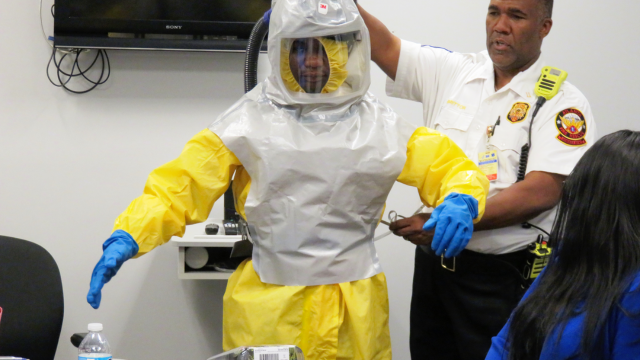
Personal protective equipment can include items such as safety helmets, eye protection, gloves, high-visibility clothing and protective footwear.
PPE is important where it is genuinely required.
However, good safety management does not begin by handing employees PPE and ignoring the underlying hazard.
Suppose workers are exposed to harmful dust.
A better control might involve eliminating the process, substituting a safer material, enclosing the activity or using effective extraction.
Respiratory protective equipment may still be necessary, but the stronger approach is to control the hazard as close to its source as reasonably practicable.
Where PPE is required, it must be suitable, maintained appropriately and supported by relevant information and training.
Worker Consultation and Safety Culture
Health and Safety for Employees should not flow only from management to employees.
HSE requires employers to consult workers on workplace health and safety.
Consultation allows employees to contribute to discussions about hazards, controls and training.
This is valuable because workers often understand exactly where a process becomes difficult.
For example, a written procedure may say that employees must use a particular lifting aid. Workers may know that the aid does not physically fit into the area where the load is handled.
Without consultation, management may believe the risk has been controlled when the practical problem remains.
A strong safety culture encourages people to report concerns without fearing that every report will be treated as a complaint or personal failure.
What Should Health and Safety Awareness Training Cover?
A useful beginner programme should provide enough knowledge for learners to recognise fundamental workplace safety principles.
A typical course may cover:
- employer and employee responsibilities;
- common workplace hazards;
- risk assessment;
- accident prevention;
- manual handling awareness;
- fire and emergency procedures;
- PPE;
- workplace welfare;
- incident reporting;
- safe working behaviour.
The precise content should reflect the intended audience.
Training for an office employee should not be identical to training for a construction worker simply because both programmes are called “health and safety awareness”.
Employers must still identify job-specific training requirements from their own risk assessment.
Choosing Health and Safety Awareness Training
When comparing courses, start with the intended learning outcome.
Is the programme simply intended to introduce safety concepts to a new employee?
Is it designed for supervisors?
Does the learner need to perform risk assessments?
Will they eventually become a health and safety professional?
Those are very different learning needs.
For general introductory learning, online training can provide a convenient foundation. Learners comparing providers can, for example, browse Learning Facility’s health and safety training options.
Before buying this or any other programme, check the current syllabus, assessment arrangements, learning time, certificate type and any accreditation claim against what you actually need.
A course described as “CPD”, “certified”, “diploma” or “accredited” should not automatically be assumed to be a regulated UK qualification. If formal recognition matters, identify the awarding or accrediting body and verify the exact status independently.
What Health and Safety Awareness Training Cannot Do
Awareness training has a defined purpose.
It can help a learner identify basic hazards and understand workplace safety responsibilities.
It cannot automatically establish competence for every safety-critical activity.
Additional specialist training or practical assessment may be necessary for activities involving:
- forklift trucks or specialist plant;
- asbestos;
- lifting operations;
- scaffolding;
- complex machinery;
- hazardous substances;
- confined spaces;
- electrical work;
- specialist first aid.
Competence may involve knowledge, practical skills, training and experience.
An attendance or completion certificate only shows what the certificate actually says. It should not be treated as evidence of abilities that were never assessed.
Common Health and Safety Mistakes
One common mistake is treating health and safety as paperwork.
A perfectly formatted risk assessment does not control a hazard unless the identified controls actually exist.
Another mistake is relying entirely on training.
If a task is fundamentally unsafe because equipment is defective or the process is badly designed, telling employees to “be more careful” is not an adequate solution.
Businesses can also rely too heavily on PPE instead of controlling hazards at source.
Another problem is failing to review risk assessments after the workplace changes. New machinery, staffing arrangements, substances or processes can create risks that an old assessment never considered.
Employees can make mistakes too, such as removing guards, ignoring procedures or failing to report defects.
Effective safety requires both good organisational systems and responsible individual behaviour.
Frequently Asked Questions
What is Health and Safety Awareness Training?
Health and Safety Awareness Training introduces workers to workplace hazards, risks, responsibilities and basic safety controls. The exact content varies according to the course and workplace.
Why is health and safety awareness important?
Health and safety awareness helps people identify hazards, follow controls, respond to emergencies and report problems before somebody is harmed. Awareness supports safe behaviour but must be accompanied by appropriate organisational controls.
What is the main health and safety law in the UK?
For Great Britain, the Health and Safety at Work etc. Act 1974 provides the main framework. Numerous supporting regulations apply to particular risks. Northern Ireland has its own closely related legislative framework.
Do all employees need health and safety training?
Employers must provide appropriate information, instruction, training and supervision so workers can carry out their work safely. The amount and type of training depend on the risks and the worker’s responsibilities.
Does health and safety training have to be free?
HSE states that necessary health and safety training must be provided free to employees and should take place during working hours.
What is a workplace risk assessment?
A risk assessment identifies hazards, considers who may be harmed and how, evaluates the risks and determines appropriate controls. Controls must then be implemented and reviewed.
Does a business with fewer than five employees need a risk assessment?
Yes. The duty to assess risks still applies. In Great Britain, the significant findings do not have to be recorded in writing where fewer than five employees are employed, although keeping a record can still be useful.
Is PPE always the best way to control workplace hazards?
No. Employers should consider whether hazards can be removed or controlled through stronger measures first. PPE is particularly important for residual risks that cannot be adequately controlled by other means.
Is every workplace accident reportable under RIDDOR?
No. RIDDOR applies only where the statutory reporting criteria are met. Businesses may still need or choose to record other accidents and near misses internally.
Does an online health and safety awareness course make someone a health and safety professional?
No. An introductory course can build useful awareness, but professional or safety-critical responsibilities may require substantially more education, experience, specialist training and demonstrated competence.

Conclusion
Health and Safety Awareness Training provides an important foundation for understanding how workplace injuries and ill health can be prevented.
For Health and Safety for Beginners, the essential principle is straightforward: recognise hazards, understand the resulting risks, control them sensibly and make sure people know how to work safely.
Employers have significant responsibilities under Health and Safety at Work law, including risk assessment, safe working arrangements, appropriate workplace conditions and suitable information, instruction, training and supervision. Health and Safety for Employees also involves individual responsibilities to take reasonable care, cooperate with safety measures and avoid interfering with safeguards.
Understanding Health and Safety Regulations UK is therefore not simply about memorising legislation. Regulations need to become practical actions: clear procedures, maintained equipment, effective risk controls, consultation, appropriate training, first-aid arrangements and accurate incident reporting.
For anyone asking why is health and safety awareness important, the answer is ultimately practical. People cannot respond properly to risks they do not recognise or controls they do not understand.
Training can help build that awareness, but it is only one part of an effective safety system. Employers must match training to actual workplace risks, and employees carrying out specialist or safety-critical activities may need additional instruction, supervised practice and demonstrated competence.
The strongest workplace safety approach combines informed employees, realistic risk assessment, effective controls, open reporting and regular review rather than relying on certificates or paperwork alone.