

Aviation is one of the most heavily regulated international industries. A commercial flight leaving Manchester may involve a UK-registered operator, passengers protected by UK consumer law, an aircraft built under internationally recognised certification principles, air traffic procedures derived partly from ICAO standards and an overseas destination governed by another state’s aviation rules.
Understanding how those layers interact is the purpose of Aviation Law Training UK.
For beginners, the subject can appear confusing because there is no single statute called “UK Aviation Law” containing every rule. Instead, the framework includes Acts of Parliament, statutory instruments, assimilated aviation regulations, Civil Aviation Authority requirements, international conventions, operating rules and detailed technical material.
Different professionals also need different parts of that framework. A pilot needs detailed knowledge of rules of the air and licensing requirements. An airline compliance manager may concentrate on operations, safety and approvals. Airport professionals need to understand aerodrome and security requirements. Lawyers may deal with liability, passenger claims, commercial arrangements, regulatory enforcement or aircraft transactions.
This guide explains the structure of Aviation Law, the difference between aviation law and air law, the major UK regulatory sources and how training can support careers in aviation, compliance and airport operations.
What Is Aviation Law?
Aviation law is the body of legal rules governing civil aviation and activities connected with aircraft and air transport.
It is unusually broad.
The subject can cover:
- aircraft operation and safety;
- pilot and crew licensing;
- airworthiness;
- airports and aerodromes;
- air traffic management;
- aviation security;
- passenger rights;
- accident investigation;
- dangerous goods;
- aircraft ownership and finance;
- insurance;
- international air services; and
- environmental and noise regulation.
Some of these rules apply directly to an aircraft in flight. Others regulate businesses and organisations operating around aviation.
That is why understanding aviation legislation and law requires more than memorising flying rules.
Aviation lawyers and compliance professionals need to know which legal instrument applies, which regulator has responsibility and whether the issue concerns safety law, commercial regulation, consumer law or another field entirely.
What Is the Difference Between Aviation Law and Air Law?
The difference between aviation law and air law is useful to understand, but it should not be treated as an absolute legal distinction.
The terms are sometimes used interchangeably.
In a narrower sense, air law often refers to rules governing aircraft, airspace, navigation, flight operations and international legal principles concerning aviation.
Aviation law can be used more broadly to include the entire legal environment surrounding aviation businesses and activities.
That can extend into employment, commercial agreements, airport economic regulation, passenger rights, insurance, competition law and environmental issues.
Consider an airline cancellation.
The pilot’s flight might involve air law relating to operational rules and airspace.
The passenger’s compensation rights arise from another part of aviation law.
The airline’s contractual relationship with an airport involves still another area.
They are connected by aviation but governed through different legal mechanisms.
For practical learning, it is therefore better to understand the scope of the issue than become overly concerned about terminology.
Why Does Aviation Need So Much Regulation?
Aviation combines several characteristics that make regulation particularly important.
First, safety consequences can be serious.
Aircraft operate in three-dimensional airspace at considerable speed, often carrying large numbers of passengers. Maintenance, pilot competence, air traffic management and operational procedures therefore require consistent standards.
Second, aviation is inherently international.
An aircraft can cross several national jurisdictions during one journey.
Without agreed rules and standards, international flight would become considerably more difficult.
Third, aviation involves large interconnected systems.
Safe flight depends not only on pilots but also on engineers, airport operators, air traffic controllers, dispatchers, manufacturers, ground handlers and regulators.
Regulation helps define the responsibilities within that system.
Finally, passengers need protection as consumers.
Aviation law consequently addresses areas such as cancellations, delays, reduced mobility, pricing and package travel as well as technical safety.
The International Foundation: ICAO and the Chicago Convention

Modern international civil aviation is built substantially around the Convention on International Civil Aviation 1944, commonly known as the Chicago Convention.
The Convention established the International Civil Aviation Organization, or ICAO.
ICAO develops international Standards and Recommended Practices covering areas such as:
- rules of the air;
- personnel licensing;
- aircraft operations;
- airworthiness;
- aerodromes;
- telecommunications;
- accident investigation; and
- aviation security.
These international standards are enormously influential, but learners need to understand an important legal distinction.
ICAO material does not automatically function in exactly the same way as a domestic Act of Parliament.
States implement international obligations through their own legal and regulatory systems.
That is why a UK professional ultimately needs to identify the applicable UK legislation, regulation or CAA requirement rather than stopping after finding an ICAO document.
International aviation law provides the framework. Domestic law gives much of that framework practical legal effect within the UK.
Who Regulates Civil Aviation in the UK?
The Civil Aviation Authority, usually called the CAA, is the UK’s specialist civil-aviation regulator.
Its responsibilities cover significant areas of aviation safety, economic regulation, consumer protection and aviation security oversight.
However, it is not the only organisation involved.
The Department for Transport develops government aviation policy and legislation and retains important responsibilities, including aspects of aviation security.
The Air Accidents Investigation Branch investigates civil aircraft accidents and serious incidents independently of the CAA.
Government departments, courts, planning authorities and other regulators can also become involved depending on the issue.
This is another important lesson in aviation regulation:
Always identify the regulator and legal function before looking for the rule.
A complaint about a cancelled passenger flight is fundamentally different from an aircraft airworthiness issue, even though both involve the same airline.
Understanding the Civil Aviation Act 1982
The Civil Aviation Act 1982 remains one of the foundational pieces of domestic UK aviation legislation.
Among other matters, it provides statutory powers supporting the regulation of civil aviation and the making of secondary legislation.
One particularly important instrument made within this broader framework is the Air Navigation Order.
Students should avoid the temptation to treat the 1982 Act as a handbook containing every operational aviation rule.
It works within a much larger legal structure.
This distinction between primary and secondary legislation is fundamental when studying aircraft laws.
An Act of Parliament may provide authority and general legal structure, while detailed operational obligations appear in regulations, orders or other legally recognised instruments.
Knowing where to look is therefore often more useful than memorising large numbers of provisions.
The Air Navigation Order 2016
The Air Navigation Order 2016, normally abbreviated to ANO 2016, is another core component of the UK framework.
It addresses a wide range of civil-aviation matters and remains particularly significant for aircraft and activities falling within its scope.
The ANO contains rules relating to matters such as registrations, documents, licensing in applicable cases, aerodromes, aircraft operations and offences.
It needs to be read alongside other regulations rather than in isolation.
The CAA’s CAP 393 brings together the ANO and a number of regulations made under relevant statutory powers as a convenient reference source.
However, practitioners should remember a wider legal principle: consolidated regulatory publications are useful for navigating the law, but authoritative legislation and current regulatory material should always be checked when legal consequences matter.
Aviation regulation changes regularly.
An old training manual can therefore become unreliable surprisingly quickly.
The UK Basic Regulation and Assimilated Aviation Law
Brexit added another layer to the legal landscape.
Before the UK’s departure from the EU aviation system, significant areas of aviation safety were regulated through European legislation and EASA structures.
When the transition period ended on 31 December 2020, relevant EU aviation regulations were brought into domestic UK law.
These were initially described as retained EU law.
From 1 January 2024, the general statutory terminology changed to assimilated law under the Retained EU Law (Revocation and Reform) Act 2023.
The principal safety framework includes UK Regulation (EU) 2018/1139, commonly called the UK Basic Regulation.
It is supported by detailed implementing regulations dealing with areas including:
- airworthiness;
- air operations;
- aircrew;
- aerodromes;
- air traffic management;
- occurrence reporting; and
- unmanned aircraft.
The important practical lesson is that an EU regulation number appearing in UK aviation material does not mean the current EU version governs the UK.
The CAA expressly warns against that assumption.
UK and EU requirements have changed independently since Brexit.
UK Rules of the Air
Rules about how aircraft actually operate in airspace form an important part of civil air regulations.
The current UK framework combines UK SERA, the Rules of the Air Regulations 2015 and relevant permissions, authorisations and exemptions.
SERA originally meant Standardised European Rules of the Air.
After Brexit, the framework was retained and then assimilated into domestic UK law.
But the UK and European rules have subsequently diverged.
The CAA therefore warns pilots and operators not to assume that a UK SERA provision and an EASA SERA provision with the same reference necessarily say the same thing.
This is exactly the kind of issue that makes current training important.
Someone relying on a European training resource without checking the UK rule could learn a requirement that is no longer identical.
The CAA is presently working towards consolidating UK SERA and the Rules of the Air Regulations into a more coherent future UK rules framework.
Aircrew and Pilot Licensing Law
Pilot licensing is another heavily regulated area.
The UK Aircrew Regulation governs important licensing and training requirements for relevant aircraft and pilots, while other arrangements apply in areas regulated through the ANO.
Pilots therefore need to know more than general Aviation Law.
They need rules specific to:
- licence privileges;
- medical fitness;
- ratings;
- training;
- examinations;
- recency; and
- revalidation or renewal.
This is also an area where regulatory change is particularly current.
A substantial licensing and training simplification programme has already changed parts of the UK framework. Further changes take effect on 1 October 2026 and 1 November 2026.
That makes old course notes especially risky.
Anyone undertaking aviation-law study for operational purposes should always verify current rules through the CAA before applying them.
Airworthiness and Aircraft Regulation
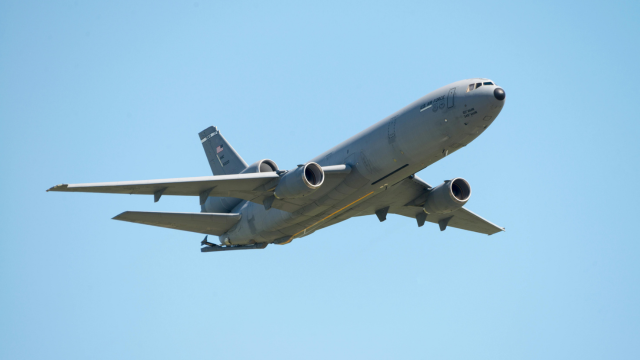
An aircraft cannot simply be designed, built and operated without a regulatory framework establishing its safety status.
Airworthiness rules cover the initial approval of aircraft and products as well as continuing safety after entry into service.
The legal framework can involve:
- aircraft design certification;
- production;
- maintenance organisations;
- continuing airworthiness;
- technical records;
- modifications; and
- release to service.
These aircraft laws interact closely with engineering standards and CAA approvals.
An aviation-law learner does not necessarily need to become an aeronautical engineer, but needs to understand the regulatory concept.
Safety is managed across the aircraft’s lifecycle.
A legally compliant operation therefore depends on more than the pilot holding the correct licence.
The aircraft, operator, maintenance system and relevant organisations must each satisfy the requirements that apply to them.
Air Operations Regulation
Commercial airlines and other operators are subject to detailed operational requirements.
The CAA’s current regulatory library includes the UK Air Operations Regulation, UK Regulation (EU) No 965/2012.
The current regulation was last amended on 30 October 2025.
Operational regulation can address areas such as operator responsibilities, flight preparation, crew arrangements, performance and operating procedures.
The exact obligations depend on the type of operation.
Commercial air transport is not regulated identically to every form of private flying.
This is why broad statements such as “UK aircraft must do X” can be dangerous.
Aviation law frequently depends on the aircraft, operation, licence and circumstances.
Professional compliance work begins by establishing those facts.
Airport Regulations UK
Airports create another major regulatory environment.
Airport Regulations UK can refer to several different layers of law and operational requirements rather than one document called the Airport Regulations.
Aerodromes can be subject to certification or licensing rules, safety requirements, security controls, planning law, economic regulation and local operational requirements.
The UK Aerodromes Regulation establishes requirements relevant to aerodromes within its scope.
The CAA’s associated regulatory material covers subjects such as:
- aerodrome management systems;
- operational procedures;
- physical characteristics;
- obstacles;
- visual aids;
- rescue and firefighting; and
- safety responsibilities.
National licensed aerodromes are also supported by standards in CAP 168.
Importantly, not every landing site in the UK necessarily requires the same type of licence.
The CAA expressly explains that some aerodromes can legally operate without an aerodrome licence, although licensing becomes compulsory for specified activities.
The correct position therefore depends on the nature of the operation.
Aviation Security Law
Safety and security are related but different concepts.
Aviation safety largely concerns preventing accidental harm through safe aircraft, operations and systems.
Aviation security focuses more heavily on protecting civil aviation from unlawful interference.
The UK framework includes the Aviation Security Act and assimilated regulations establishing security requirements.
Operational security can concern passenger screening, baggage, cargo, access to restricted areas, airport security procedures and requirements applying to air carriers.
Some detailed security requirements are naturally sensitive and are not handled like ordinary public operational guidance.
For students of aviation legislation and law, the important principle is to recognise security as its own regulatory discipline.
A pilot, airport security manager and airline compliance officer may all operate within aviation but face very different legal responsibilities.
Passenger Rights and Consumer Protection
Aviation law also follows the passenger into the commercial relationship with an airline.
The CAA enforces several consumer-protection requirements affecting air travel.
Current UK legislation includes UK261, derived from Regulation (EC) No 261/2004, which governs rights associated with certain cancellations, delays, denied boarding and downgrading.
There are also rules relating to passengers with reduced mobility, transparent ticket pricing and other consumer issues.
Since 6 April 2025, the CAA’s general consumer-enforcement powers have also operated within the enforcement regime introduced by the Digital Markets, Competition and Consumers Act 2024.
This demonstrates why aviation law is broader than air law in its narrow operational sense.
A dispute over flight compensation may have nothing to do with how the aircraft was flown.
It is nevertheless clearly an aviation-law issue.
Aviation Liability and International Carriage
International aviation also involves rules governing liability.
The Montreal Convention is particularly important in international carriage by air and can affect airline liability for matters such as passenger injury and baggage problems within its scope.
International conventions are therefore an essential part of aviation-law education.
However, applying them requires careful legal analysis.
Questions can depend on whether the convention applies to the journey, the nature of the loss, procedural requirements and domestic implementation.
A short general course can introduce these principles.
It should not be used as a replacement for qualified legal advice where a real claim or dispute is involved.
Aviation Accident Investigation
Aviation accidents create another useful example of why legal functions should be separated.
The purpose of a safety investigation is not necessarily the same as deciding civil or criminal liability.
In the UK, the Air Accidents Investigation Branch investigates civil aviation accidents and serious incidents with a safety-focused purpose.
Its work can result in safety recommendations intended to prevent recurrence.
Separate legal or regulatory proceedings may involve different organisations and different tests.
This distinction matters to lawyers, operators and safety professionals.
Evidence produced in a safety system exists within a specific legal and regulatory context.
Understanding that context is part of competent aviation-law practice.
Aviation Law and Drones
Unmanned aircraft have made the field even broader.
Drone operations can involve rules concerning:
- registration;
- operator requirements;
- remote-pilot competence;
- operational categories;
- airspace;
- geographical restrictions; and
- specific permissions.
Larger or higher-risk operations may face much more substantial requirements than a low-risk recreational flight.
Drone law also overlaps with areas outside traditional aviation regulation, including privacy and data protection.
This illustrates a recurring theme in aviation.
New technology does not create a completely separate legal universe.
Instead, it often brings together existing aviation principles with new technical requirements.
Why Aviation Compliance Matters
Aviation regulation depends heavily on organisational compliance.
An airline or airport cannot rely on every employee individually discovering the applicable rule.
Organisations need systems for identifying requirements, maintaining approvals, recording actions, reporting safety information and responding to regulatory changes.
A compliance professional may therefore spend significant time working with:
- legislation;
- CAA regulations;
- manuals;
- audit findings;
- safety-management systems;
- internal procedures; and
- regulatory correspondence.
The job is partly legal interpretation and partly operational implementation.
Knowing what the rule says is only the beginning.
The organisation must translate that requirement into something people can consistently do.
What Should Aviation Law Training Cover?
Useful Aviation Law Training UK should begin with legal structure rather than presenting a random collection of regulations.
Learners should understand the relationships between ICAO, Parliament, the Department for Transport, the CAA and regulated organisations.
From there, a broad course can introduce the Civil Aviation Act, ANO, UK Basic Regulation and major specialist areas.
The strongest programmes also teach learners how to find current rules.
That skill matters because aviation regulation changes too frequently for static memorisation to be enough.
Training should ideally develop an ability to answer questions such as:
What legal instrument governs this issue?
Is this a statutory requirement or CAA guidance?
Does it apply to this particular aircraft or operation?
Has the rule changed?
Is this UK law or an EU/EASA source that no longer reflects the UK position?
Those questions are much closer to real professional practice than simply recalling regulation numbers.
Learning Aviation Law as a Beginner
Beginners benefit from learning in layers.
Start by understanding the institutions.
Learn what ICAO, the Department for Transport and CAA actually do.
Then study the major legal sources.
After that, explore specialist fields such as operations, aircrew, airports, security and passenger rights.
A structured introductory course can help organise those concepts.
For example, Learning Facility’s Aviation Law and Regulation (UK Standard) covers UK aviation rules, international agreements, compliance obligations and legal aspects of air traffic management.
The course has no formal entry requirement, which makes it accessible to beginners as well as professionals seeking a broad introduction.
Its certificate should be understood proportionately.
Completion can demonstrate that someone has undertaken the provider’s course, but it is not a professional legal qualification, CAA licence or regulated aviation qualification on the evidence presented on the course page.
Do You Need a Law Degree to Work in Aviation Regulation?
Not necessarily.
Aviation regulation employs people from many backgrounds.
Compliance officers may come from operations, safety, engineering or quality assurance.
Airport managers can develop regulatory expertise through operational careers.
Pilots and engineers need legal knowledge relevant to their licensed responsibilities without becoming lawyers.
Someone who wants to practise as a solicitor or barrister specialising in aviation law is in a different position.
They must complete the professional qualification pathway applicable to the legal profession.
An online aviation-law certificate does not qualify somebody to practise law.
The distinction between learning Aviation Law and becoming a qualified lawyer is therefore essential.
Careers Using Aviation Law Knowledge
Aviation-law knowledge can support several occupations.
An aviation compliance officer may monitor whether an organisation’s procedures meet regulatory requirements.
A regulatory affairs specialist may track changes, coordinate submissions and work with the CAA or other authorities.
Airport professionals can use regulatory knowledge in operations, safety, security and management.
Airline managers need to understand the legal framework surrounding their operational decisions.
Qualified lawyers can specialise in areas including aircraft finance, liability, commercial contracts, regulatory proceedings, insurance and passenger disputes.
Government and regulatory organisations also employ policy, legal, technical and oversight professionals.
The qualifications required differ sharply between these roles.
Learning aviation law can strengthen professional understanding, but it does not automatically create eligibility for every aviation career.
Keeping Aviation Law Knowledge Current
Perhaps the most important habit in aviation regulation is checking the date.
The UK framework is currently evolving.
The CAA’s licensing simplification programme is producing changes to pilot requirements.
UK SERA has already diverged from the EASA system and is being considered for future consolidation with domestic Rules of the Air.
Airspace governance is also changing: new Civil Aviation Authority (Air Navigation) Directions 2026 and Air Navigation Guidance 2026 are due to take effect on 1 October 2026.
Aviation regulation will continue changing as drones, advanced air mobility, sustainable aviation and new technologies develop.
Professionals therefore cannot rely permanently on something learned during one course.
Regulatory literacy includes knowing how to update yourself.
Common Mistakes When Studying Aviation Law
The first mistake is relying on an EU or EASA webpage without confirming whether it reflects current UK law.
The regulatory systems started from very similar positions but have diverged.
Another mistake is treating CAA guidance and legislation as though they have identical legal status.
Guidance, Acceptable Means of Compliance, Certification Specifications and statutory obligations each have different functions.
A third mistake is assuming that one rule applies to every aircraft and operator.
Aviation regulation regularly depends on aircraft category, operation and approval.
Finally, learners sometimes mistake course terminology for professional recognition.
Words such as “advanced”, “diploma”, “standard” or “accredited” do not by themselves prove that a programme is a regulated UK qualification or CAA-approved training.
Always check the actual status.
The Future of UK Aviation Regulation
Post-Brexit divergence is likely to remain one of the defining features of UK aviation regulation.
The UK initially inherited much of the European aviation framework, which created considerable continuity.
Over time, independent amendments mean professionals increasingly need to distinguish current CAA requirements from current EASA ones.
Technology will create another source of change.
Drones, remotely piloted aircraft and potentially advanced air mobility require regulators to adapt traditional concepts of aircraft, airspace and operating responsibility.
Cybersecurity will also become increasingly important as aviation systems become more connected.
Environmental regulation will continue influencing aircraft operations, airports and airspace policy.
The future aviation-law professional will therefore need both legal knowledge and an ability to understand rapidly changing technology.
Memorising today’s rules will not be enough.
Key Takeaways
UK aviation law is a layered system combining domestic legislation, assimilated aviation regulations, CAA regulatory material and international obligations.
The Civil Aviation Act 1982, Air Navigation Order 2016 and UK Basic Regulation are important parts of that structure, but no single document contains every aviation requirement.
The current rules of the air combine UK SERA, the Rules of the Air Regulations 2015 and relevant permissions, authorisations and exemptions.
UK and EU aviation rules should no longer be assumed to be identical.
Airport Regulations UK can involve aerodrome safety, licensing or certification, security, consumer obligations, planning and economic regulation depending on the airport and activity.
Introductory aviation-law training can help learners understand the framework, but a private completion certificate does not create professional legal status, CAA licensing privileges or regulated occupational competence.
FAQ
What is aviation law?
Aviation Law is the body of law and regulation governing aircraft, airlines, airports, aviation safety, licensing, airspace, passenger rights, security and other activities connected with civil aviation. It includes domestic and international legal sources.
What is the difference between aviation law and air law?
The difference between aviation law and air law is not universally fixed. Air law is sometimes used more narrowly for rules concerning aircraft, flight and airspace, while aviation law can encompass the broader commercial, regulatory and consumer environment. In practice, the terms are also frequently used interchangeably.
What are the main aviation laws in the UK?
Important sources include the Civil Aviation Act 1982, Air Navigation Order 2016, Rules of the Air Regulations, UK Basic Regulation and detailed regulations covering aircrew, air operations, airworthiness, aerodromes, security and other areas. International conventions also influence the UK framework.
What are civil air regulations?
Civil air regulations are rules governing non-military aviation. In the UK, they are distributed across several Acts, orders and UK regulations rather than contained in one document. Their subjects include aircraft operation, safety, licensing, airspace and aerodromes.
What are the main Airport Regulations UK professionals should know?
Airport Regulations UK depend on the aerodrome and activity. Relevant requirements can include the UK Aerodromes Regulation, Air Navigation Order, CAA certification or licensing standards, security legislation, passenger-accessibility rules and economic regulation. Airports may also operate under local procedures and other laws.
Do I need a qualification to study Aviation Law Training UK?
Not necessarily. Introductory Aviation Law Training UK can have open entry. Learning Facility’s linked course, for example, states that no formal qualification is required. Professional roles can have much more substantial academic, occupational or licensing requirements.
Does an aviation-law course qualify me as an aviation lawyer?
No. Learning aviation law does not itself qualify somebody to practise as a solicitor or barrister. Legal practitioners must satisfy the applicable professional qualification requirements. Aviation-law courses can instead provide specialist subject knowledge.
Is UK aviation law still the same as EU aviation law?
No. Much of the UK framework originated from EU regulations that were brought into UK law after Brexit, but both sides have subsequently amended their rules. The CAA expressly warns that current EU webpages should not be relied upon as statements of current UK aviation law.
Why is aviation law important for airport and airline professionals?
Airlines and airports operate in highly regulated environments covering safety, security, operations, licensing, passenger rights and organisational compliance. Understanding aviation legislation and law helps professionals recognise obligations, identify regulatory risk and know when specialist advice is required.
How often does aviation law change?
There is no single timetable. Different regulations are amended independently. Changes are continuing in areas such as pilot licensing, airspace and CAA technical requirements during 2026. Aviation professionals should therefore use current regulatory sources rather than relying indefinitely on historic training material.

Conclusion
Aviation Law Training UK is valuable because civil aviation operates through an unusually complex combination of domestic rules, international standards and detailed technical regulation.
A learner may begin with the Civil Aviation Act 1982 and Air Navigation Order 2016, but quickly discovers that Aviation Law extends far beyond those instruments. Aircrew, airworthiness, commercial operations, aviation security, passenger rights and Airport Regulations UK each have their own regulatory structures.
The post-Brexit framework makes current knowledge particularly important. Many UK regulations retain familiar European numbering, but the CAA explicitly warns that today’s EU rules should not be assumed to state today’s UK law. Understanding modern civil air regulations therefore requires checking UK sources directly.
The supplied Learning Facility course can provide an accessible introduction to aviation legislation and law, international standards and compliance. It is most useful as foundation or supplementary learning rather than as a substitute for legal qualification, CAA licensing or role-specific professional training.
For anyone working around airlines, airports, compliance or aircraft laws, the most durable skill is not memorising every regulation number. It is learning how the legal framework fits together, identifying the authority behind a requirement and checking whether the rule is still current before acting on it.