
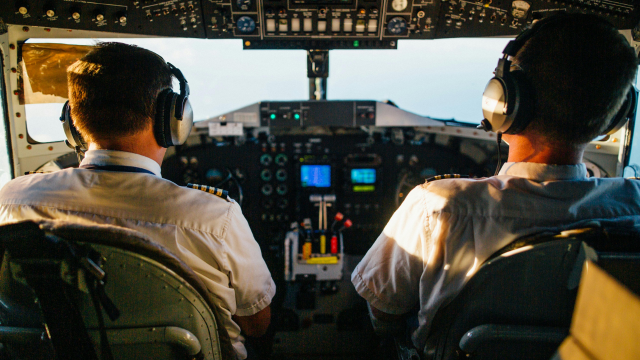
An airline can have aircraft available, passengers booked and airports ready, yet still be unable to operate a flight if the correct crew are not legally and operationally available.
That is why Aviation Crew Management Training matters.
Behind an airline’s pilots and cabin crew is a planning and operations function responsible for ensuring that qualified people are in the right place, at the right time and within the limits governing duty, rest, training and operational competence. When severe weather, sickness, aircraft changes or delays disrupt the original plan, those teams may need to rebuild parts of the operation in real time.
This is far more complicated than creating a staff rota.
Effective Airline Crew Management combines workforce planning, Aviation Crew Management Training regulation, fatigue awareness, communication, data analysis and rapid operational decision-making. Crew managers may also work closely with flight operations, training departments, human resources, safety teams and airline operations control centres.
For anyone interested in Aviation Crew Management Careers UK, understanding how these responsibilities fit together is the best place to begin.
What Is Aviation Crew Management?
Aviation crew management is the process of planning, allocating, monitoring and supporting the people required to operate flights safely and legally.
Depending on the airline, the function may include both pilots and cabin crew or separate teams may manage each workforce.
The work commonly covers three time horizons.
Long-term planning estimates how many crew members the airline will need months or seasons ahead.
Roster production assigns duties, rest, leave, training and standby periods to individual crew members.
Day-of-operation crew control deals with whatever changes after the roster has already been published.
Those three stages are connected.
If the airline’s long-term plan underestimates the number of captains required during summer, short-term controllers may spend months trying to solve a problem that began during strategic planning.
Good crew management therefore looks beyond today’s departure board.
What Does an Aviation Crew Manager Do?
What does an aviation crew manager do? The precise answer depends on the airline and job title, but the central responsibility is usually ensuring safe, legal and effective crew coverage.
A manager may lead planners or schedulers who build flight pairings and individual rosters. They may monitor crew availability, training requirements, leave, qualifications and fatigue-related constraints.
They also need to understand what happens when the plan stops working.
Imagine that poor weather delays an aircraft by three hours.
The passengers may still be ready to travel. The aircraft may remain serviceable. But the operating crew could be approaching the maximum duty permitted under the applicable flight-time limitation scheme.
Crew control then needs to determine whether the original crew can legally complete the flight, whether another crew is available, whether somebody can be positioned from another base or whether the flight itself needs to change.
Each option affects something else.
A replacement crew used tonight may no longer be available tomorrow morning.
That is why crew management is often described as optimisation under constraints.
Crew Planning, Rostering and Crew Control
These terms are sometimes used loosely, but they describe different parts of the process.
Crew planning
Crew planning looks ahead.
The team may analyse the airline’s future flight schedule and estimate the number of captains, first officers and cabin crew required at different bases.
They also need to consider annual leave, training, expected absence, recruitment pipelines and seasonal changes.
If an airline adds ten aircraft but does not recruit or train enough crew, the timetable may look commercially attractive without being operationally deliverable.
Crew rostering
Rostering converts available crew resources into individual work patterns.
A roster can include flying duties, standby, positioning, training, leave and rest.
The challenge is to create a plan that is simultaneously:
- legal;
- operationally robust;
- reasonably efficient; and
- workable for employees.
These objectives do not always point in the same direction.
The most commercially efficient roster on paper may provide little resilience when disruption occurs.
Crew control
Crew control manages the live operation.
If someone reports sick, a flight diverts or severe disruption affects several aircraft, controllers need to repair the crew plan quickly.
This often involves 24-hour operations because airlines continue flying outside normal office hours.
Calm decision-making becomes particularly important during major disruption.
Aviation Crew Management Is Not the Same as CRM
Crew management is frequently confused with Crew Resource Management, or CRM.
They sound similar but are different.
CRM is a safety and human-factors discipline concerned with how operational crews communicate, cooperate and make decisions.
Current CAA CRM training addresses issues such as:
- communication;
- situational awareness;
- human error;
- decision-making;
- fatigue;
- workload;
- leadership;
- teamwork; and
- threat and error management.
Aviation crew management, by contrast, usually refers to managing the crew workforce and operation.
A crew planner may decide which pilot operates Manchester to Tenerife.
CRM affects how that pilot and the rest of the operational crew subsequently work together.
The two interact because poor crew-management decisions can create fatigue, workload or communication pressures that affect operational safety.
But completing a CRM course does not train someone to become a crew-planning manager, and completing crew-scheduling training does not replace required CRM training for flight or cabin crew.
Why Crew Management Matters to Aviation Safety
Airline rostering can look like an administrative function until fatigue is considered.
Fatigue can impair judgement, slow reaction time and reduce attention.
Those effects are particularly serious in Aviation Crew Management Training.
A roster therefore cannot be assessed purely by asking whether every flight has enough people assigned to it.
The airline must consider whether those people can perform safely.
The CAA’s current flight-time limitation rules explicitly place responsibilities on operators when building rosters.
Schedules should give crew enough opportunity for rest, avoid seriously disruptive work patterns and take account of the cumulative effect of duty and rest.
This means Aviation Safety Management reaches directly into crew planning.
A planner who understands operational fatigue contributes to safety before the aircraft leaves the ground.
Understanding Flight Time Limitations
Flight Time Limitations, usually shortened to FTL, are among the most important regulatory areas for airline crew planners.
The rules govern matters including flight duty periods, duty, rest and related scheduling requirements.
Beginners sometimes imagine this means entering a maximum number of hours into software.
The real position is more complex.
Allowable duty can depend on factors such as reporting time, the number of sectors, previous duties and extensions or other provisions applicable to the operation.
Roster patterns also matter beyond individual numerical limits.
Current CAA requirements specifically address the relationship between repeated duties and rest and require operators to consider cumulative fatigue.
Legal does not automatically mean sensible
A roster may technically sit within a numerical limit while still creating a fatigue concern.
For example, repeated early starts or disruptive changes between day and night work can affect sleep.
The CAA therefore emphasises fatigue management rather than treating FTL compliance as the entire solution.
Crew managers need to understand the difference between:
“The system allows this duty”
and:
“This is a robust and appropriately managed roster.”
That distinction is fundamental to professional practice.
Fatigue Risk Management

Fatigue Risk Management, or FRM, takes a broader approach to managing fatigue.
Rather than relying entirely on fixed limits, airlines can use reporting, analysis and operational evidence to identify where fatigue risks occur.
A crew member might report that a particular sequence repeatedly leaves staff insufficiently rested.
The airline can then analyse whether that pattern creates a broader issue.
Useful data may include fatigue reports, delays, roster patterns and operational performance.
This connects directly with the airline’s wider Safety Management System.
A mature organisation should be interested in early warning signs rather than waiting until fatigue contributes to a serious event.
Crew-management teams therefore need a reporting culture in which legitimate fatigue concerns can be raised without being treated automatically as unwillingness to work.
What Is an Aviation Safety Management System?
An Aviation Safety Management system is an organised way for an Aviation Crew Management Training organisation to identify hazards, assess risk, implement controls and monitor whether those controls remain effective.
The CAA describes an SMS as systematic and proactive.
That word “proactive” matters.
A good safety system does not wait for an accident before investigating whether something is wrong.
Crew planning can contribute valuable safety information.
Repeated last-minute crew substitutions might indicate insufficient staffing resilience.
Frequent duty extensions may suggest the published schedule is unrealistic.
High numbers of fatigue reports around particular pairings may identify a roster-design issue.
Those patterns can be fed back into planning decisions.
Crew management is therefore one part of the airline’s wider safety-management environment.
Essential Aviation Crew Management Skills
Strong Aviation Crew Management Skills combine technical knowledge with people management.
Regulatory understanding
Managers need enough knowledge of applicable Aviation Crew Management Training rules to recognise whether a roster or proposed operational change is legal.
They do not need to become Aviation Crew Management Training lawyers.
They do need to know when a decision has regulatory consequences and when specialist advice is required.
FTL is particularly important, along with internal operations manuals, training requirements and applicable collective or scheduling agreements.
Analytical thinking
Crew planning involves large numbers of variables.
The best solution is rarely obvious.
Managers need to understand resource levels, costs, training requirements, reserve coverage and operational risks simultaneously.
This makes numerical confidence and analytical reasoning valuable.
Communication
A technically correct decision can still create problems if it is communicated badly.
Crew managers may need to explain a disruptive roster change to pilots or cabin crew, brief senior operations leaders or coordinate with training and HR teams.
During disruption, information needs to be concise and accurate.
Decision-making
Not every decision can wait for a long meeting.
An operations-control environment can require rapid choices when flights are already delayed.
The manager needs to identify the most important constraints, choose an option and understand the consequences.
People leadership
Senior crew-management roles are not only technical.
Managers may lead scheduling teams, resolve performance issues, coach employees and manage change.
Current airline vacancies increasingly ask for leadership capability alongside knowledge of rostering and regulation.
Crew Management Systems and Airline Technology
Airlines cannot realistically manage thousands of crew duties through spreadsheets alone.
Specialist crew-management platforms are used to manage qualifications, availability, pairings, rosters, training and operational changes.
The software can automatically identify many illegal combinations.
That is extremely useful.
It can also create false confidence if users assume that anything the system accepts must be operationally wise.
A professional crew planner still needs to understand the rules and logic beneath the software.
If configuration data is wrong, automated checking can also be wrong.
If disruption creates several possible solutions, the system may not fully understand which choice best protects tomorrow’s operation.
Technology supports judgement rather than replacing it.
Training and Qualification Management
Crew members do not remain operationally current indefinitely simply because they were trained when they joined the airline.
Pilots and cabin crew have recurrent training and checking requirements.
For flight crew, current rules include recurrent training, operator proficiency checks, line checks, emergency and safety equipment training and modular CRM requirements.
Cabin crew likewise have operator conversion, recurrent safety and CRM requirements.
This creates another major crew-management responsibility.
A planner cannot assign someone to a flight merely because they are employed by the airline.
The relevant qualifications and recency must be valid.
Training therefore becomes part of workforce planning.
If too many people require recurrent training during the same month, flying availability may fall.
Strong airlines plan those cycles well in advance.
Disruption Management
This is where crew management becomes particularly demanding.
Suppose thunderstorms affect several airports across Europe.
Aircraft start arriving late.
Crew duties extend.
Some crews are displaced overnight.
Aircraft end the day at different airports from those originally planned.
The next day’s operation may already be affected.
Crew controllers then need to recover the network while respecting legal duty and rest requirements.
Standby crew may be called.
Crew can sometimes be positioned as passengers to another location.
Flights might be delayed, combined or cancelled.
The optimal choice is not necessarily the one that saves the current flight.
Sometimes protecting tomorrow’s larger programme is operationally more sensible.
Experienced crew managers learn to think several moves ahead.
Standby and Reserve Crew
Airlines maintain standby resources because operational disruption is inevitable.
Crew members can become unavailable because of sickness, transport problems or duty limitations.
Standby provides resilience.
Too little standby creates a fragile operation.
Too much standby can be expensive and inefficient.
Crew planners therefore analyse historic disruption and forecast demand to determine appropriate coverage.
This is one area where data science is increasingly useful.
Airlines can examine patterns to estimate when and where replacement crew are most likely to be needed.
The objective is not to predict every absence perfectly.
It is to create enough resilience that ordinary disruption does not immediately produce widespread cancellations.
Training Routes for Aviation Crew Management

There is no single mandatory UK licence called an “aviation crew manager licence”.
Employers set their own requirements for crew planning and management positions.
People may enter from airline operations, cabin crew, flight operations, scheduling, workforce planning or data roles.
Business, Aviation Crew Management Training management, mathematics and operations research can also provide useful backgrounds.
Aviation operations apprenticeships
England’s current Level 4 Aviation Operations Manager apprenticeship provides one structured route into broader Aviation Crew Management Training operations management.
Its specialist options include flight operations management.
The standard includes resource planning, compliance, safety, team leadership and daily operational management.
It does not specifically qualify somebody as a crew manager.
It does demonstrate the type of occupational competence relevant to the wider Aviation Crew Management Training-operations environment.
Internal airline training
Airlines often train crew schedulers in their own systems, procedures and agreements.
That is necessary because airline operations vary significantly.
A planner moving between airlines may understand FTL well but still need training in the new carrier’s software, fleet, bases, collective agreements and operations manual.
Internal operational knowledge is therefore extremely important.
Is an Aviation Degree Necessary?
Not always.
Crew planning is not a licensed profession in the same way as piloting or aircraft maintenance certification.
Aviation Crew Management Training degrees can provide useful industry understanding, but airlines may recruit people with other backgrounds if they have suitable analytical and operational skills.
Mathematics, data science and operations research can be particularly relevant to sophisticated planning roles.
Current easyJet recruitment, for example, shows how optimisation teams use mathematical modelling, simulation and advanced analytics across crew planning and aircraft scheduling.
That does not mean every crew scheduler needs advanced programming.
It does show that the profession increasingly contains both operational and highly technical career pathways.
Aviation Crew Management Careers UK
Aviation Crew Management Careers UK can begin under several job titles.
A crew scheduling executive or crew controller may work on individual rosters and day-of-operation changes.
A crew planner may concentrate more heavily on future pairings and roster construction.
A crew training planner ensures training events are scheduled without undermining operational coverage.
More experienced staff can progress to crew planning manager, crew scheduling manager or wider operations-management positions.
Other progression routes can include:
- flight operations;
- integrated operations control;
- airline resource planning;
- workforce analytics;
- operations research;
- safety and compliance; and
- senior operational leadership.
The boundaries differ between airlines.
A small carrier may have one team covering several functions that a major airline divides across specialist departments.
What Do Current Airline Employers Look For?
Current UK vacancies illustrate several recurring requirements.
Airlines value people who understand legal and industrial constraints.
They also want strong analytical capability because crew resources have to be used efficiently.
Systems knowledge matters, particularly experience with airline rostering or planning platforms.
Communication is repeatedly important.
Crew-planning teams work with flight operations, cabin services, training, HR, employee representatives and senior management.
Managers also need leadership skills because the role involves developing teams as well as optimising schedules.
Increasingly, employers look for data-driven thinking.
Modern crew planning measures productivity, roster stability, training delivery and operational performance rather than relying entirely on intuition.
Working Patterns and Operational Pressure
Crew-management careers can involve unconventional hours.
The airline operates at weekends, overnight and on public holidays.
Long-term planning teams may work relatively conventional office patterns.
Crew control and operational scheduling can be very different.
Some teams operate shifts because disruption needs to be managed whenever flights are running.
Applicants should therefore examine the actual working pattern rather than assuming every Aviation Crew Management Training-office role is nine to five.
The work can also become stressful during major disruption.
Several operational problems may arrive at once.
Strong organisations therefore need appropriate staffing, escalation procedures and supportive leadership rather than relying on individuals to absorb unlimited pressure.
Crew Wellbeing and Fair Rostering
A legally compliant roster can still affect quality of life substantially.
Pilots and cabin crew may work early mornings, nights, weekends and duties involving time-zone changes.
Roster stability therefore matters to employees.
Crew managers have to balance this against operational needs.
Some airlines also operate bidding systems that allow crew to express preferences for particular duties, destinations, days off or working patterns.
It may not be possible to satisfy every request.
Transparent rules help.
When employees understand how preferences are processed and why operational constraints exist, roster decisions are easier to accept than when allocation appears arbitrary.
Wellbeing is not purely an HR issue.
Fatigue, morale and operational performance can influence one another.
How to Build Aviation Crew Management Skills
Start with airline operations rather than jumping immediately into software.
Understand how a flight programme works.
Learn the difference between aircraft scheduling, crew scheduling and crew rostering.
Then study flight-time limitations and fatigue.
These are core concepts because they determine whether a theoretically efficient roster can actually be operated safely.
After that, build stronger spreadsheet and data skills.
Excel remains useful in many operational environments even when airlines use specialist platforms.
Understanding formulas, structured data and basic analytics can make a beginner more effective.
Communication and decision-making should develop alongside technical knowledge.
A planner eventually needs to explain why a proposed solution will not work, sometimes to people under considerable pressure.
That requires confidence supported by evidence.
Aviation Crew Management Training: What Should a Good Course Cover?
A useful Aviation Crew Management Training programme should go beyond generic leadership.
It should explain how airline operations actually fit together.
Important subjects can include crew-resource forecasting, pairing construction, roster production, flight-time limitations, fatigue risk, crew qualifications, standby planning and operational disruption.
Learners should also understand Aviation Safety Management principles and how a planning decision can create or reduce operational risk.
Practical exercises are particularly valuable.
For example, a learner could be given a disrupted flight schedule and several available crew members, each with different duty histories and qualifications.
The task would be to identify a legal and operationally sensible solution.
That develops far more useful judgement than simply memorising definitions.
Smart Crew Planning, AI and Automation
AI and optimisation are already moving from theory into airline operations.
easyJet has publicly described using AI and crew-planning tools inside its Integrated Control Centre to help identify crew options and support disruption decisions.
Current airline recruitment also shows growing interest in advanced analytics, optimisation and automation.
These systems can evaluate thousands of possible combinations much faster than a human planner.
They can help answer questions such as:
Which crew assignment produces the least disruption?
Where should standby resources be positioned?
How can recurrent training be scheduled without reducing operational resilience?
But airlines should not assume that automated optimisation solves every problem.
A mathematical model needs an objective.
If the objective focuses entirely on cost, it may produce unattractive rosters.
If it focuses entirely on crew preferences, it may reduce resilience.
Human managers therefore remain responsible for deciding what the system should optimise and whether its recommendations make operational sense.
Future Trends in Airline Crew Management
Crew management is likely to become more predictive.
Instead of responding only after disruption begins, airlines can increasingly use historical and live data to identify where pressure is developing.
Weather forecasts, sickness patterns, aircraft utilisation, seasonal demand and crew availability can feed into planning models.
Workforce analytics will also become more sophisticated.
Managers may model future recruitment requirements by base, fleet and rank months before shortages become operational problems.
Automation could take over more repetitive roster-building activity.
That may shift human roles towards exception management, analysis and strategic decisions.
The best crew-management professionals will therefore combine Aviation Crew Management Training knowledge with data literacy and human judgement.
Key Takeaways
Aviation Crew Management Training concerns much more than producing staff rotas.
Airline crew teams manage pilots and cabin crew across planning, rostering, training, standby and live operational disruption.
Flight-time limitations and fatigue-management responsibilities mean that crew planning has direct aviation-safety implications.
Strong Aviation Crew Management Skills include regulatory awareness, analytical thinking, communication, decision-making, technology skills and people leadership.
Airline Crew Management should not be confused with Crew Resource Management. CRM focuses on human factors and operational teamwork, while crew management focuses on planning and managing crew resources.
There is no single mandatory UK crew-manager licence. Entry routes include airline operations experience, apprenticeships, Aviation Crew Management Training study, workforce planning, data and other relevant backgrounds.
FAQ
What is Aviation Crew Management Training?
Aviation Crew Management Training teaches how airlines plan, schedule and control flight and cabin crew resources. Topics may include rostering, flight-time limitations, fatigue, crew qualifications, training schedules, standby planning, disruption management and airline operations systems.
What does an aviation crew manager do?
What does an aviation crew manager do? A crew manager typically oversees planning teams responsible for ensuring that qualified pilots or cabin crew are assigned legally and efficiently. The role can include roster quality, regulatory compliance, training delivery, workforce planning, disruption resilience, people management and performance analysis.
Is crew management the same as Crew Resource Management?
No. Crew Resource Management is a human-factors and safety-training discipline for operational crews, covering communication, teamwork, decision-making and threat and error management. Crew management generally concerns workforce planning, rostering, crew legality and operational resource management.
What Aviation Crew Management Skills are important?
Useful Aviation Crew Management Skills include analytical reasoning, knowledge of flight-time limitations, fatigue awareness, communication, problem-solving, attention to detail and confidence with rostering and data systems. Management roles additionally require team leadership and stakeholder skills.
Do I need a degree to work in Airline Crew Management?
Not necessarily. Employers set their own entry requirements. People may enter Airline Crew Management from airline operations, cabin crew, scheduling, workforce planning or analytical roles. Aviation, business, mathematics or data-related qualifications can be useful depending on the position.
Why are flight-time limitations important in crew planning?
FTL rules protect against unsafe duty and fatigue patterns by setting requirements around duty, flight duty and rest. Operators must also consider cumulative fatigue and disruptive schedules rather than treating numerical limits as the only safety consideration.
What is the role of Aviation Safety Management in crew planning?
Aviation Safety Management helps organisations identify and control safety risks. Crew planning contributes by monitoring fatigue, staffing resilience, recurrent disruption and other factors that could affect operational safety.
What careers are available in aviation crew management?
Aviation Crew Management Careers UK can include crew scheduler, roster production executive, crew controller, training planner, crew planner, crew planning analyst, crew scheduling manager and crew planning manager. Progression can also lead into operations control, flight operations, analytics or senior airline management.
Is crew management a shift-based career?
Some roles are. Long-term planning teams may follow office hours, while crew control and day-of-operation teams often work shifts because airlines operate throughout the day, overnight, at weekends and on public holidays. Working patterns differ by airline and department.
Will AI replace airline crew planners?
AI and optimisation are likely to automate more routine planning and evaluate possible roster solutions faster. Human professionals will still need to interpret regulation, manage exceptions, consider fatigue and wellbeing, communicate with people and decide whether automated recommendations make operational sense.

Conclusion
Aviation Crew Management Training provides an introduction to one of the most important behind-the-scenes functions in airline operations.
Every flight needs appropriately qualified crew who are available, current, rested and legally permitted to operate. Creating that coverage involves much more than filling blank spaces on a roster.
Professional Airline Crew Management brings together workforce planning, flight-time limitations, training, fatigue management, disruption recovery and increasingly sophisticated analytical systems. Those responsibilities also connect directly with Aviation Safety Management, because poor roster decisions can affect alertness and operational performance.
For people developing Aviation Crew Management Skills, the strongest foundation is a combination of aviation knowledge, analytical thinking, communication and practical understanding of how an airline operates.
There is no single compulsory crew-manager licence in the UK. Career routes can begin through aviation operations, scheduling, cabin crew, workforce planning, apprenticeships or analytical disciplines. Current airline recruitment also shows growing demand for people who can work confidently with automation, data and optimisation.
That creates several possible Aviation Crew Management Careers UK, from roster production and crew control to planning leadership, operations control and advanced workforce analytics.
Technology will undoubtedly automate more of the scheduling process. But airlines will still need professionals who can recognise when a legally possible roster is operationally weak, understand how today’s decision affects tomorrow’s programme and balance efficiency with the safety and wellbeing of the people who operate the aircraft.