
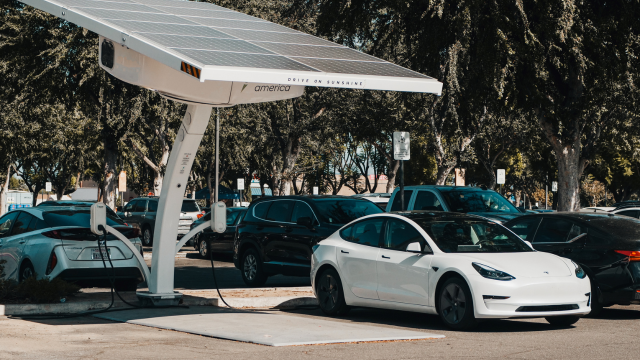
The Future of sustainable trasportation is changing from something we simply use into a system that cities, governments and businesses increasingly have to redesign. Electric vehicles are becoming more common, charging networks are expanding, public transport is becoming more digitally connected and towns are paying greater attention to walking, cycling and the relationship between transport and land use.
That is the bigger picture behind the future of sustainable transportation.
Replacing petrol cars with electric cars is important, but it is only one part of the transition. Sustainable Transportation Careers UK also asks whether people can reach work without owning a car, whether buses connect effectively with trains, whether streets are safe enough for children to cycle, whether freight can move efficiently with fewer emissions and whether new housing is built in places where everyday journeys can be shorter.
For people considering Sustainable Transportation Careers UK, this creates opportunities across engineering, transport planning, environmental consultancy, data, charging infrastructure, public policy and urban development. It also means that understanding Electric Vehicle Technology alone is no longer enough to understand the whole sector.
The future is likely to involve a mixture: cleaner vehicles where vehicles are necessary, stronger public transport where shared travel works, and more walking, wheeling and cycling for shorter journeys.
What Is Sustainable Transportation?
Sustainable transportation is the movement of people and goods in ways that reduce environmental harm while remaining practical, safe, accessible and economically useful.
The idea has three connected dimensions.
The environmental side receives most attention. Transport systems need to reduce greenhouse-gas emissions, air pollution, energy use and unnecessary resource consumption.
The social side matters just as much. A transport system cannot really be described as Sustainable Transportation Careers UK if older people, disabled travellers, rural communities or households without cars cannot use it effectively.
Then there is the economic dimension. Transport needs to connect people with jobs, education, healthcare and businesses without creating unreasonable costs or chronic congestion.
Good Sustainable Transportation Careers UK therefore balances all three.
An electric car can reduce tailpipe emissions, but it still occupies road and parking space. A new railway can reduce car dependence, but only if people can afford and conveniently access it. A cycle route may be environmentally efficient, but it will have limited impact if junctions feel unsafe.
The strongest solutions consider the whole journey.
Why Is Sustainable Transportation Important?
The answer to Why is sustainable transportation important begins with emissions.
Domestic transport remains the UK’s largest source of domestic greenhouse-gas emissions. Road traffic accounts for most of that impact, particularly through petrol and diesel use.
That makes transport decarbonisation essential to wider climate targets.
Yet carbon is only one reason.
Busy roads also influence local air quality, noise, congestion, road safety and how much urban space is available for housing, businesses, trees or public spaces. Long car-dependent journeys can increase household transport costs and make people with limited access to a vehicle more isolated.
A more Sustainable Transportation Careers UK transport system can address several of these problems together.
For example, a reliable bus route may reduce car journeys while also helping a young person reach college and an older resident reach healthcare. A well-designed walking route may reduce emissions while encouraging physical activity and improving access to local shops.
This is why the benefits of sustainable transportation extend beyond climate policy.
Sustainable Transportation Careers UK mobility can support cleaner air, better connectivity, more efficient use of streets, public health and stronger access to employment and services.
Those benefits are not automatic, however. Poorly planned measures can shift costs onto certain communities or provide infrastructure that looks good on paper but is inconvenient in practice.
Successful transport policy has to understand how people really travel.
Electric Vehicles Will Be Important — But They Are Not the Whole Answer
Electric vehicles are the most visible part of transport decarbonisation.
Battery electric cars produce no tailpipe exhaust emissions during use, which makes them particularly valuable for reducing direct road-transport emissions and local air pollution from exhausts.
The UK transition is already well under way.
Government policy currently points towards ending the sale of new purely petrol and diesel cars in 2030 and moving to fully zero-emission new cars and vans by 2035. The precise manufacturer targets used to reach that destination are being reviewed in 2026, illustrating how quickly this policy area continues to evolve.
Electric Vehicle Technology is improving
Modern Electric Vehicle Technology involves much more than placing a battery inside a conventional car.
Important areas include battery chemistry, thermal management, electric motors, power electronics, regenerative braking, charging systems and vehicle software.
Engineers are working to improve energy density, charging speed, battery life, safety and manufacturing efficiency.
Battery management is particularly important. Batteries need to operate within safe temperature and charge limits while delivering predictable performance over many years.
Software increasingly helps optimise those processes.
The automotive workforce therefore needs skills that combine traditional mechanical engineering with electrical systems, electronics, diagnostics and software.
Charging infrastructure matters as much as the vehicles
People are unlikely to move confidently towards electric vehicles if they cannot charge them conveniently.
By July 2026, the UK had more than 121,000 publicly available EV chargers under the government’s new charger-count methodology.
That sounds substantial, but the national total hides important differences.
A driver with a driveway may charge overnight at home. Someone living in a flat or terraced street may depend much more heavily on public infrastructure.
Long-distance drivers need rapid or ultra-rapid charging in different locations from commuters leaving vehicles parked for several hours.
A successful charging network therefore needs the right type of charger in the right place, not simply the largest possible headline number.
Electrification does not solve congestion
Imagine replacing every petrol car in a congested city centre with an electric equivalent.
Tailpipe emissions would fall dramatically.
The traffic jam would remain.
So would demand for parking, road space and much of the physical infrastructure associated with high levels of car use.
That is why Sustainable Transportation Careers UK policy also needs public transport, active travel and better planning.
Public Transport Has to Become Easier to Use

A Sustainable Transportation Careers UK city needs credible alternatives to private-car journeys.
That means buses, trains, trams and other shared transport need to be reliable enough that people can plan around them.
Price matters, but so does friction.
If someone needs three different apps, separate tickets and uncertain transfer times to make one cross-city journey, the Sustainable Transportation Careers UK option becomes unnecessarily difficult.
England’s current Better Connected strategy therefore places significant emphasis on simpler payment, better information and more integrated journeys.
This idea is sometimes described as mobility integration.
The traveller should not have to care which organisation owns every piece of the network. They should be able to understand how to get from one place to another.
Smart ticketing and contactless payment can help.
So can accurate real-time information.
Yet technology alone cannot compensate for poor frequency.
An impressive journey-planning app is of limited use if the next bus does not arrive for an hour.
The future of public transport therefore depends on both digital integration and basic service quality.
Smart Mobility: When Data Becomes Part of the Transport Network
Transport increasingly generates large volumes of data.
Vehicles, traffic signals, ticketing systems, navigation applications and charging networks can all provide information about how the system is performing.
Used well, this creates opportunities for smarter mobility.
Traffic data can help authorities understand congestion patterns. Public-transport data can improve passenger information. Electric-vehicle charging data can reveal where infrastructure is heavily used or where capacity is missing.
England’s 2026 Transport Data Action Plan aims to strengthen the way transport data is shared and used, while the government has also made funding available for integrated transport digital-twin trials.
A digital twin is essentially a digital representation of a physical system that can help planners test scenarios.
A local authority might use one to examine how changes to traffic flows, new housing or public-transport provision could affect the wider network before making expensive physical changes.
This is a good example of how Sustainable Mobility UK is becoming partly a data profession.
The people shaping transport increasingly need skills in analytics, modelling, GIS, software and digital systems alongside traditional engineering and planning knowledge.
Walking, Wheeling and Cycling Are Infrastructure, Not Lifestyle Extras
Some of the lowest-carbon journeys require surprisingly little technology.
Walking and cycling are particularly effective for short trips.
Yet people will not switch simply because a campaign tells them it is healthier.
Infrastructure matters.
If the route to a school involves a high-speed junction that parents consider dangerous, many families will continue driving even when the distance is short.
That is why the current English active-travel strategy focuses heavily on safer routes, crossings and better integration with other forms of transport.
The goal is not to eliminate cars.
It is to make walking, wheeling or cycling a realistic choice for journeys where those modes make sense.
This also illustrates an important feature of Eco-Friendly Transportation: the most Sustainable Transportation Careers UK technology is not always the newest one.
A safe pavement can be transport infrastructure.
So can a protected cycle lane.
Their impact depends on how well they connect homes with the destinations people actually need.
Low-Carbon Cities Need Better Planning, Not Just Better Vehicles
Transport demand is strongly influenced by the way places are built.
If homes are located far from employment, schools, shops and public transport, residents may have little realistic choice except to drive.
That means transport planning and urban planning cannot be separated completely.
England’s Better Connected strategy explicitly links transport with housing and development and promotes a more integrated approach to where development happens.
This is sometimes described as transport-oriented development.
The general principle is straightforward: place more homes and activity where people can access efficient transport and everyday services without unnecessarily long journeys.
A low-carbon city might therefore combine denser development around transport corridors with high-quality public spaces, walking routes, cycle infrastructure and reliable public transport.
The objective is not density for its own sake.
It is accessibility.
A city where residents need to travel several miles for every basic activity will create different transport pressures from one where many needs can be reached locally.
What Does Eco-Friendly Transportation Look Like for Freight?
Passenger journeys receive most public attention, but goods also need to move.
Online shopping, construction, food distribution and business supply chains create enormous freight demand.
There is no single Sustainable Transportation Careers UK solution for all of it.
Electric vans can work well for some urban deliveries. Cargo bikes may be efficient for smaller last-mile movements in dense areas. Rail freight can move large quantities over longer distances. Heavy goods vehicles present more difficult decarbonisation challenges because of vehicle weight, range and charging requirements.
This means freight decarbonisation is likely to use several technologies.
Battery-electric systems may become increasingly important, while other solutions and low-carbon fuels may remain relevant in harder-to-electrify applications.
Logistics itself can also become more efficient.
Better route planning, fuller vehicles, urban consolidation and smarter delivery schedules can reduce unnecessary kilometres even before the propulsion technology changes.
That is a useful reminder that Sustainable Transportation Careers UK transport is as much about systems as machines.
Sustainable Transportation Careers UK
The transition creates career paths for people with very different backgrounds.
Transport planners analyse how people and goods move and develop proposals for roads, public transport, walking and cycling. The National Careers Service notes that the role can include promoting public transport, cycling and walking and can lead into transport policy or environmental consultancy.
Town planners work at the relationship between development and infrastructure. Sustainable Transportation Careers UK planning can involve reducing car dependence, supporting cycle routes and considering how transport influences new housing and urban regeneration.
Environmental consultants can work on sustainability impacts, climate issues and regulatory requirements.
Engineering creates another large group of opportunities, including automotive development, EV systems, charging infrastructure, rail engineering and maintenance.
Then there are increasingly digital roles.
Smart mobility creates demand for transport-data analysts, software developers, GIS professionals, modelling specialists and people who understand intelligent transport systems.
Possible career directions therefore include:
- transport planning;
- EV and automotive engineering;
- chargepoint infrastructure;
- rail engineering;
- environmental consultancy;
- town and urban planning;
- transport policy; and
- mobility data and technology.
These are different professions with different qualification expectations.
Completing one introductory sustainable-transport course does not qualify somebody automatically for all of them.
What Skills Will Sustainable Transport Professionals Need?

The answer depends on the career.
Engineers need much stronger mathematics and technical knowledge than a policy professional. Transport planners need modelling, analytical and stakeholder skills. Environmental consultants may need science, regulation and assessment knowledge.
Certain themes cut across the sector.
Systems thinking
Transport decisions rarely affect only one thing.
Adding road capacity may influence travel demand, development and congestion elsewhere. Removing parking may affect businesses differently depending on the availability of alternatives.
Professionals need to consider second-order effects rather than evaluate interventions in isolation.
Data literacy
Transport planning increasingly uses large datasets.
Professionals may work with passenger information, traffic counts, origin-destination data, vehicle telemetry or geographic information.
Even people who are not specialist data scientists benefit from understanding how evidence is generated and what its limitations are.
Environmental literacy
Sustainability professionals need to understand the difference between tailpipe emissions, whole-life emissions, energy consumption and other environmental impacts.
An electric vehicle has no exhaust emissions during driving, for example, but manufacturing still requires materials and energy.
Good sustainability analysis avoids pretending that one technology has zero environmental impact.
The Future of sustainable trasportation Communication
Transport projects affect real communities.
People care deeply about road changes, parking, public transport and development.
Professionals therefore need to explain evidence clearly and listen to people who may experience a proposal differently from the project team.
Technical knowledge alone is not enough.
How Can Beginners Learn About Sustainable Transportation?
There is no single qualification called “sustainable transportation professional”.
The right education depends on the intended destination.
An aspiring transport planner may study geography, engineering, mathematics, economics or transport planning before pursuing professional development. Town-planning careers often involve RTPI-accredited education. Engineering roles usually need suitable technical qualifications, while environmental careers may require environmental science or sustainability study.
Short online learning can be useful before committing to one of those paths.
For example, Learning Facility’s Sustainable Transportation Careers UK Transportation course introduces learners to urban planning, alternative fuels, green technologies, policy and the environmental and social dimensions of mobility.
That breadth can suit somebody who is exploring the field or already works in a related role and wants a better overview.
The course requires no formal qualification to start and provides a Learning Facility PDF certificate.
Its most realistic value is therefore introductory knowledge.
Someone aiming to become a transport planner, engineer or qualified environmental specialist should then identify the education, apprenticeship or professional route expected for that particular career.
The Benefits of Sustainable Transportation for Businesses
Sustainable Transportation Careers UK mobility is not only a government concern.
Businesses influence transport through employee commuting, delivery fleets, company vehicles, travel policies and where offices or facilities are located.
Moving fleet vehicles to lower-emission technology may reduce direct transport emissions.
But businesses can also look at demand.
Could some journeys be avoided through better planning? Could rail replace some domestic business travel? Is safe cycle parking available to employees? Does the workplace sit somewhere that staff can actually reach by public transport?
A credible travel strategy examines practical alternatives rather than imposing unrealistic expectations.
There can also be operational benefits.
Electric fleets may have different maintenance and energy characteristics from combustion vehicles. Better route planning can reduce wasted mileage. Flexible working can reduce some commuting.
The exact commercial case depends on the organisation.
Sustainability should therefore be supported by proper cost and operational analysis rather than assumptions that every green measure automatically saves money.
The Future of Smart and Shared Mobility
Shared mobility covers systems such as bike sharing, car clubs and other arrangements that allow people to access transport without necessarily owning the vehicle.
Its sustainability effect depends on what journey it replaces.
A shared bike replacing a short car journey can reduce emissions and road-space demand.
A shared vehicle replacing a bus journey may produce a different result.
That is why transport planners increasingly look at mobility systems rather than labels.
Future services may combine public transport and shared mobility more closely through journey-planning and payment platforms.
A traveller might plan a route involving rail, shared cycle and walking within one digital environment.
The technical term “Mobility as a Service” is often used for this kind of integration.
Whether it succeeds depends on something very ordinary: the underlying transport options still need to work.
Technology can make a good network easier to use. It cannot create a good network out of unreliable services.
Autonomous Vehicles and AI
Autonomous vehicles receive significant attention in discussions about future transport.
They may eventually change freight, public transport and private mobility, but their sustainability impact is not predetermined.
If autonomous vehicles encourage more empty vehicle movements or make car travel so convenient that total road traffic increases, some expected environmental benefits could be reduced.
If they are integrated into efficient shared services, the outcome may be different.
Artificial intelligence is more immediately relevant in areas such as route optimisation, traffic management, predictive maintenance and transport-data analysis.
AI can help identify patterns that would be difficult to process manually.
Human professionals still need to understand whether the model is using suitable data and Sustainable Transportation Careers UK whether the proposed intervention makes sense for the place involved.
Transport decisions affect safety, equality and access, so automated optimisation cannot be treated as the only objective.
Will Electric Vehicles Make Transport Fully Sustainable?
No.
EVs are an important part of decarbonising road transport, particularly because they eliminate tailpipe greenhouse-gas and exhaust pollution during operation.
But cars still require roads, parking, manufacturing materials and energy.
Tyres and brakes also contribute non-exhaust particulate pollution, Sustainable Transportation Careers UK although regenerative braking can reduce conventional brake use in EVs.
A transport system based entirely on private electric cars would therefore solve some problems while leaving others largely intact.
The more complete solution is usually a hierarchy.
First, consider whether a journey needs to happen in the same way.
Then make walking and cycling realistic for appropriate short trips.
Provide effective public and shared transport for larger flows.
Where cars and commercial vehicles remain necessary, increasingly use zero-emission technology.
This is much closer to the likely future of Sustainable Transportation Careers UK than simply replacing every engine.
What Could Low-Carbon Cities Look Like by 2035?
The change is likely to be gradual rather than futuristic.
Cities may simply become easier to move around without thinking constantly about transport.
A resident could walk safely to local services, cycle to a station and take a train using more integrated ticketing. Electric buses could operate on busy corridors. Deliveries might combine electric vans with cargo bikes in dense areas.
EV charging would become ordinary street and car-park infrastructure rather than something drivers need to search for anxiously.
More transport information would operate in real time.
Urban development might concentrate more heavily around well-connected areas.
The result would not necessarily be a city without cars.
It would be a city where owning and using a car is no longer the only realistic way to participate fully in everyday life.
That is a more meaningful definition of low-carbon mobility.
Key Challenges That Still Need Solving
The transition is not guaranteed to be smooth.
Cost remains important. Electric vehicles can still be expensive to purchase, while public transport affordability affects whether households genuinely have an alternative.
Infrastructure is uneven. The latest charging statistics show substantial geographical differences, particularly between parts of Great Britain and Northern Ireland.
Rural transport poses another challenge because lower population density makes frequent shared transport harder to provide economically.
There are also workforce needs.
Mechanics need electric-vehicle skills. Local authorities need planners and data professionals. Infrastructure projects require engineers and technicians.
Finally, public trust matters.
People are more likely to support change when the alternative works before existing options become more difficult.
Sustainable mobility succeeds when it gives people credible choices.
FAQ
What is sustainable transportation?
Sustainable Transportation Careers UK is the movement of people and goods in ways designed to reduce environmental impacts while remaining safe, accessible, affordable and economically practical. It can include electric vehicles, public transport, rail, walking, cycling, shared mobility and better urban planning.
Why is sustainable transportation important?
Why is sustainable transportation important? One major reason is that transport remains the UK’s largest domestic greenhouse-gas-emitting sector. Sustainable transport can also improve air quality, reduce congestion, support physical activity and give people without cars better access to jobs and essential services.
What are the main benefits of sustainable transportation?
The benefits of sustainable transportation can include lower greenhouse-gas emissions, reduced exhaust pollution, healthier travel, lower congestion, better accessibility and more efficient use of urban space. Actual benefits depend on how well individual projects are planned and which journeys they replace.
Are electric vehicles sustainable?
Electric vehicles are an important lower-carbon alternative to petrol and diesel vehicles and produce no tailpipe exhaust emissions during use. They still require energy, batteries, materials, roads and manufacturing, so they should be viewed as one part of a broader Sustainable Transportation Careers UK system rather than a zero-impact solution.
What is sustainable mobility?
Sustainable Transportation Careers UK mobility focuses on whether people can access destinations efficiently and with lower environmental impact. It considers public transport, walking, wheeling, cycling, shared mobility and land use alongside cleaner vehicles. Sustainable Mobility UK policy varies between the four nations because substantial transport responsibilities are devolved.
What careers are available in sustainable transportation?
Sustainable Transportation Careers UK can include transport planner, town planner, environmental consultant, EV engineer, vehicle technician, rail engineer, charging-infrastructure specialist, transport-data analyst and transport-policy professional. Qualification requirements differ substantially between these occupations.
Do I need a degree to work in sustainable transportation?
Not always. Some careers, particularly professional engineering, planning and environmental roles, commonly involve degrees or higher apprenticeships. Technical and maintenance roles may be entered through college or apprenticeships. Short sustainability courses can provide useful background but do not replace occupational qualifications where those are expected.
Is sustainable transportation only about electric vehicles?
No. Eco-Friendly Transportation includes electric vehicles but also public transport, rail, active travel, shared mobility, freight efficiency and urban planning. Electrifying vehicles reduces one major source of emissions, but it does not by itself eliminate congestion or car dependency.
What skills are useful for a sustainable transport career?
Useful skills include data analysis, systems thinking, communication, environmental understanding and digital literacy. Technical careers may additionally require electrical, mechanical or software knowledge, while planners may need modelling, geography, policy and stakeholder-engagement skills.
What is the future of sustainable transportation in the UK?
The future is likely to combine growing EV adoption and charging infrastructure with cleaner public transport, integrated ticketing, smarter transport data, active travel and development planned around better connectivity. The precise policy pathway will continue evolving, including the current review of the UK’s Zero Emission Vehicle Mandate.

Conclusion
The future of sustainable transportation is unlikely to be defined by one invention.
Electric cars will matter. So will better batteries, faster charging and increasingly sophisticated Electric Vehicle Technology. But electrification alone cannot create a transport system that is affordable, accessible or free from congestion.
The larger transition involves designing transport around the journeys people need to make.
That means strengthening public transport, making walking and cycling realistic choices, using transport data more intelligently and building homes and services in places where people do not automatically need to drive everywhere.
This broader understanding of Eco-Friendly Transportation is already visible in England’s current integrated-transport and Sustainable Transportation Careers UK active-travel strategies, while Scotland, Wales and Northern Ireland continue developing their own approaches within devolved systems.
For learners interested in Sustainable Transportation Careers UK, the range of work is correspondingly wide. Engineers are needed for vehicles and infrastructure. Planners shape networks and development. Environmental specialists assess impacts, while data professionals help make mobility increasingly intelligent.
An introductory course such as Learning Facility’s Sustainable Transportation programme can provide a useful overview of those connections before a learner chooses a more specialised route.
Ultimately, the most significant benefits of sustainable transportation will come when cleaner technology and better planning work together. A low-carbon transport future is not simply one where the cars are electric. It is one where people have safer, cleaner and Sustainable Transportation Careers UK more practical choices about how they move in the first place.